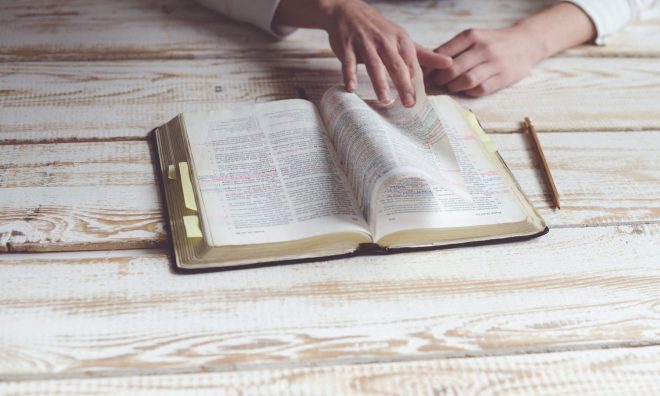
For All the Saints, Who from their Labors Rest

Sermon on Revelation 7:13-17‌
All Saints’ Sunday‌
November 5-6, 2023‌
Our Hope Lutheran Church‌
Huntertown, Indiana

‌‌Note: This is a sermon version of my All Saints’ Day devotional, revised to remember my late wife, Kris, and dear friends at my home parish. She entered rest on 29 April 2022 and was buried from this church on 6 May 2022.

Text: “Then one of the elders addressed me, saying, “Who are these, clothed in white robes, and from where have they come?” I said to him, “Sir, you know.” And he said to me, “These are the ones coming out of the great tribulation. They have washed their robes and made them white in the blood of the Lamb. “Therefore, they are before the throne of God, and serve him day and night in his temple; and he who sits on the throne will shelter them with his presence. They shall hunger no more, neither thirst anymore; the sun shall not strike them, nor any scorching heat. For the Lamb in the midst of the throne will be their shepherd, and he will guide them to springs of living water, and God will wipe away every tear from their eyes.”

‌Prayer: For all the saints who from their labors rest, Who Thee by faith before the world confessed, Thy name, O Jesus, be forever blest. Amen.

Christ is Risen!

‌Grace, mercy, and peace be to you from God our Father and our risen Lord and Savior, Jesus Christ, who by his death has destroyed death and by his rising again opened the kingdom of heaven to all believers.

Introduction: All Saints’ Day is a memorial day. From the earliest days of the church, first congregations, then regions, remembered Christian loved ones on the day they died — especially those who died as martyrs. The November 1 celebration began under Pope Gregory III in the 8th century and was made universal by Pope Gregory IV in 837. Since then, the church has marked that day to follow the lead of the Book of Hebrews: “Remember your leaders, those who spoke to you the word of God; consider the outcome of their life, and imitate their faith. Jesus Christ is the same yesterday and today and for ever.” (Hebrews 13:7–8) Memorial days are really the last stage of grief. We thank God for our departed, remember how they lived, especially how they trusted God, and make their trust in Jesus our own. They are now at rest with Jesus, after all, and one day we will join them.

‌Our text this morning opens the curtain of heaven for us to see the throne of God. The Elder explains to St. John that the crowd no one can number are coming from the Great Tribulation, the time between the Ascension of Jesus and his return in glory. They are gathered before the Father and the Lamb of God. They are God’s children from every time – Adam and Noah, Joseph and Moses, David and Elijah, all those trusting in the coming Messiah. The Apostles and Evangelists, Christians from every time and place, language, and nation are there. There also people much more familiar to us. Our grandparents, parents, aunts and uncles, brothers and sisters, spouses, friends, and sometimes children are there. It is good to remember them, to thank God for them, to consider the things they did, especially the good things they did in faith and because they love God.

‌Who do you remember? I remember my own grandparents and grandparents-in-law, who lived and prospered through incredibly hard times, kept the faith in their own … unique … ways, who were often living examples of saints and sinners at the same time. Some of you remember the days of the World Wars and the Depression all too well. I remember my grandmother Smith reading from the big, KJV family Bible to me as a child on her lap. I remember my grandmother Schneider and her aunt who gave me my first Greek New Testament as a confirmation gift. There are also my parents and parents-in-law, troubled in troubled times, yet who still kept their faith. Also present is my father, that bruised reed the Lord did not break. And now in 2023, i remember my beloved wife, Kris, who has joined them. She loved me, her children and grandchildren through constant pain all of her life, produced endless beautiful and practical crafts that blessed many. Her straightforward, rock-hard faith was an inspiration to me and to many.

‌Who do you remember? As you and I look out at our church today, we remember brothers and sisters in Christ who sat here with us. We can almost see them in their favorite pews. All are at rest with their Savior. Many others are there, too. My Fathers and brothers in the faith. I remember those that taught me and many others and laid the stole of ministry on me the same stole I have now laid on my son-in-law, spiritual sons. I am thankful for them and for their confessions. I pray to be as faithful to the Lord as they were.

So, how did they get there before the throne? Born sinners, they struggled with the Old Adam and Old Eve until the day they died. Yet when they were baptized, Jesus united them with his death. He, the Lamb of God, took away the sins of the world – their sin, our sin. When he rose from the dead, he opened the way for them – and us – to be with him forever. He gave them and us the white robe when he baptized them, the robe of his perfect righteousness. He placed the palm branch of victory in their hands. When we worship, we join them and angels and archangels in praise. You can almost see them waving the branches when we sing with them, “Hosanna in the highest!”

At the deaths of our dear saints, Jesus sent his angels to bring them home to him in paradise. In our church, we drape their bodies at rest in a pall. It reminds us of the white robes of his righteousness and the palms of victory they now wave before the throne.

So, how did they make it through this Valley of the Shadow of Death? In life, Jesus was their Rock, their Fortress, and their Might; he was their Captain in the well-fought fight. Their fears were calmed when they remembered he was with them. They placed their burdens at the feet of the cross. The Lord’s Supper strengthened them like bread for the journey — a phrase that pastors often say when communing the very ill and those near death.

I was blessed to celebrate All Saints Day with my wife thirty-four times, thankful for each day we were together, praying to thank the Lord for those safely home. Now I pray after receiving the Lord’s Supper to thank God for my late wife, an ever-growing list of grandchildren, my children, and their spouses. I will rejoice that this year I can still hold their hands, speak with them, and see them all once in a while. Soon, all too soon, the angels will come for one of them or me, to join those at the Wedding Feast of the Lamb as the Lord Jesus says to one of us, “Welcome to the joy of your Father.”

As glorious as this is, yet there breaks a more glorious day. As blessed as being with Jesus in paradise, the best is yet to come. The saints triumphant will rise in bright array; The King of glory will pass on His way. Sin and death will die. The world renewed, restored, and transformed, fit for eternity. God will pitch his tent with us and live with us forever. And he will dry every tear from our eyes. There will be no more sorrow, sighing grief, or pain. All these will pass away. God will make all things new again. Once more, he will see all that he has made and now redeemed with his own blood and say, “Look, it is very Good!” Amen, come Lord Jesus, at the end of days and at the end of our days.

Christ is Risen!

Prayer: Oh, may Thy soldiers, faithful, true, and bold, Fight as the saints who nobly fought of old And win with them the victor’s crown of gold! Amen.

‌Now may the peace of God, which passes all understanding, set watch over your hearts and minds in Christ Jesus to life everlasting.

Rev. Robert E. Smith
Pastor Emeritus
Fort Wayne, Indiana

©2023-2026 Robert E. Smith. All rights reserved. Permission granted to copy, share and display freely for non-commercial purposes. Direct all other rights and permissions inquiries to cosmithb@msn.com

Sleep Well, My Love

by Robert E. Smith

Sleep well, my love,
When next you wake,
Your eyes will see our Savior’s face.
With joy, he’ll dry your every tear,
And gently calm your every fear.

Sleep well, my love,
Before too long,
I’ll hear his call to come on home,
With you and loved ones gone before
We’ll see the God whom we adore.

Sleep well, my love, The Shepherd keep,
Your body safe until the time
When he will call us from the grave,
To live with him in endless day.

Notes: Kristina Pugh Smith (1960-2022) went to sleep on Thursday evening, April 28th, 2022. Her husband and daughter had spent the day with her. She settled into a coma, and her family was alerted that death was near. The next morning, they had the blessing of spending the last seven hours of her life with her. Her husband said words similar to this, along with the Nunc Dimittis, that Friday morning. As morning prayer began in Kramer Chapel that day, therapeutic care was removed, and hospice care began. As the seminary community prayed a prayer of commendation of the dying, she gently entered eternal life. This poem was written to capture those words a week later.

©2022 Robert E. Smith. All rights reserved. Permission granted to copy, share and display freely for non-commercial purposes. Direct all other rights and permissions inquiries to cosmithb@msn.com

Church Words: Holy

[Twelfth in a series of posts on church words] 

Encore Post:

“Holy” is one of the most common church words. It is a part of the very fabric of the English language, used often even by non-Christians. We give very little thought to the word — most often we think of it as another way of saying “Godly.” We use it to connect something to God — or as a swear word or phrase to emphasize something. So, if we think about it, the phrases “Holy God” or “Holy Trinity” seem like we’re repeating ourselves — kind of like saying “Godly God.”

The Hebrew word for holy is קָדֹושׁ (kadosh — Separate, devoted, pure). When we say God is holy, we mean he is completely separate from all things, high above all things. Theologians use it to describe all of God’s qualities (attributes). Everything about God is absolutely pure and not mixed with anything else. When it comes to talking about God’s will and actions, the word “holy” means that God is absolutely good and without sin. Nothing impure can exist in his presence. That is why a sinful person cannot see God’s glory and live. That is why, in the temple, only the purified High Priest could enter the Most Holy Place (Holy of Holies) once a year, and only to bring the blood of the sacrifice that brought the people of Israel the forgiveness of sins.

Because God is holy, anything set apart for his use is called holy. The temple, the sacrifices, his people. In the New Testament, the Word of God and the Sacraments are called holy: they connect God and his people. They are Means of Grace, how God, in his grace and mercy, creates faith in our hearts, forgives our sins, claims us as his own children, and gives us life and salvation for the sake of the atoning sacrifice of God’s Son on the cross. In Baptism, Jesus makes us holy. (Ephesians 1:4, 5:27) Now we are his saints (“Holy Ones”). We are a holy nation called to proclaim his good news to the whole world.

Now God calls on us, as his holy people, to be holy as our Heavenly Father is holy and perfect. (Leviticus 19:2, Matthew 5:48) As sinners, we will not be completely holy in our lifetime, but in faith, trusting in Christ, we can begin to do good works. Because of the cross, God sees only these works and remembers our sins no more. When we die and enter Christ’s eternal presence, we will then be purged of our sins once and for all, and live as holy people in fellowship with our Holy God forever.

Originally posted at What does this Mean? Blog: https://whatdoesthismean.blog

The posts in the blog What does this Mean? are now available at What does this Mean? | Rev. Robert E. Smith | Substack

Rev. Robert E. Smith
Pastor Emeritus
Fort Wayne, Indiana

©2019 Robert E. Smith. All rights reserved. Permission granted to copy, share and display freely for non-commercial purposes. Direct all other rights and permissions inquiries to cosmithb@msn.com

Church Words: Orthodox

[Tenth in a series of posts on church words]

Encore Post:

Orthodox is a term that is a bit like catholic in the minds of casual Christians. We hear these terms as they are applied to identifiable sects. That identification can lead us to assume that the word itself must refer to the sect.

Catholic simply means universal or whole. So, in the Sunday morning prayers, when we pray for “the whole Christian Church on earth,” we could just as well say the “Catholic Church” on earth. Our friends in the Roman Catholic sect are the most significant association with that term, applying to a specific denomination within Christianity. There are also other non-Roman Catholic denominations that identify themselves as Catholic. Rome neither holds nor exercises exclusive rights to that term, though the pope may want us to think that.

Orthodox rings similarly in our ears. For those who’ve heard of the Eastern Orthodox Church, we assume those terms are synonymous with the Eastern Christian sect. That’s not exactly so.

The Eastern and Western Christians split in 1054 AD. The patriarchs of Rome and Constantinople had a falling-out, which led to the split. The patriarchs of the Eastern churches sided with the patriarch of Constantinople. The Roman patriarch found himself alone, heading a large portion of Christianity. The churches we call Orthodox are from the Eastern side and those patriarchs. That time deserves its own treatment in another article or articles.

Ὀρθόδοξος (Orthodox) simply means straight teaching, opinion, or belief. For those of an etymological inclination, ὀρθῶς (orthōs) means straight, unbent, or unwavering. And, δόξα (doksa) means teaching, opinion, or belief. It is the foil of heterodoxy, which is mingled or combined teaching.

There’s more here than simply lexical understandings. Orthodoxy in Christianity is normed by the scriptures and our teaching drawn from them. The Bible is the norm that norms our teaching. Our teaching is the norm, which is normed by the Word of God, the Bible.

There are also orthodox teachers of non-Christian religions. Orthodox adherents of Judaism, who may or may not be Orthodox Jews, will want to destroy the Dome of the Rock, rebuild the Jewish Temple, and resume the O.T. sacrificial system. Orthodox Muslims are politely called “extremists.” It is orthodoxy in Islam to desire and seek the death of the infidel, all non-Muslims. Orthodoxy in the Latter-Day Saints requires plural marriage and the rejection of all unbelievers (Christians outside the LDS). Former Mormons receive the worst fate among orthodox LDS. They are the only ones who can go to “outer darkness.”

There is also an orthodoxy in all sects of Christianity. Orthodox Lutherans, Anglicans, Baptists, and Methodists seek to maintain adherence to the teachings as we have received them. In a seeming incongruity, orthodox teachers of heterodox churches teach contrary to Christian orthodoxy and the Word of God from which it springs.

For we Lutherans, that means that we hold to our doctrines and remain in the Word of God, always ready to be corrected by the scriptures in our understanding and teachings. The five solas of the reformation (grace alone, faith alone, scripture alone, Christ alone, to the glory of God alone) constantly direct us back to the Word of God and conform our straight teaching to it.

By our Orthodoxy, we preach Christ, and Him crucified.

Originally posted at What does this Mean? Blog: https://whatdoesthismean.blog

The posts in the blog What does this Mean? are now available at What does this Mean? | Rev. Robert E. Smith | Substack

Rev. Jason M. Kaspar
Sole Pastor
Mt. Calvary Lutheran Church & Preschool
La Grange, TX

©2021 Jason Kaspar. All rights reserved. Permission granted to copy, share and display freely for non-commercial purposes. Direct all other rights and permissions inquiries to cosmithb@msn.com.

Church Words: Christian

[Nineth in a series of posts on church words]Encore Post: The oldest and most universal name for the Church is “Christian.” In fact, followers of Jesus were first called “Christian” by Gentiles in the city of Antioch — as recorded by St. Luke in the Book of Acts! (Acts 11:26) It was not a complement. The followers of crazy new religions were called by their founder’s name — with the -ian ending! In fact, most of them probably thought the disciples of Jesus were followers of a man named “Chrestus” — a popular name for a slave. Christians seemed to have called themselves “slaves of Jesus Christ” (that’s what the phrase translated “servants of Jesus Christ” really means!), brothers, holy ones (saints) or disciples. Eventually, the nickname stuck when it was used by Romans to charge Christians with believing in Jesus Christ. Since it was good enough for the martyrs, it was good enough for everyone!

Today we use it in a variety of ways. We use it for a follower of Christ, the religion they belong to, a behavior in keeping with the word of God, political parties and many other ways. As fine a word as it is, sometimes it can be quite useless. For example, Mormons, who believe that God was a man and that we, too, can earn god or goddess-hood, Jehovah’s Witnesses, who do not believe Jesus is God or died on the cross, and many others call themselves Christian. In fact, Social Scientists count them along with us. People who have never darkened the door of a church will count themselves as Christians, because they believe they are “good people.”

Yet we confess that we believe in the “one, holy, Christian and Apostolic Church.” For all the false claims and misleading uses of the word, we are proud to “belong to Christ.” After all, he loved us, set aside his glory, suffered and died for us, paying the price of our sins, rose again to break the seal of the grave for us and, in baptism, made us his own. So we fight for the term and gladly wear his name — the name the martyrs confessed and died to proclaim. Lord, may we follow in their train!

Originally posted at What does this Mean? Blog: https://whatdoesthismean.blog

The posts in the blog What does this Mean? are now available at What does this Mean? | Rev. Robert E. Smith | Substack

Rev. Robert E. Smith
Pastor Emeritus
Fort Wayne, Indiana

©2019 Robert E. Smith. All rights reserved. Permission granted to copy, share and display freely for non-commercial purposes. Direct all other rights and permissions inquiries to cosmithb@msn.com

Church Words: Catholic

[Fourth in a series of posts on church words]

Encore Post:

“That’s Catholic!” you may hear someone say when they see a Lutheran make the sign of the cross, a crucifix hanging in the sanctuary of a Lutheran church, a pastor wearing a clerical collar, or another traditional practice they’ve not seen Lutherans do. What they’re thinking is this means the Lutheran in question is acting like a Roman Catholic. They are often unaware that Lutherans have had these practices since the time of the Reformation or that the word catholic did not originally refer to the Christian tradition headed by the Pope. The word catholic has been used since the early church to refer to the whole Christian Church.

The word catholic is from the Greek word καθολικός (literally “according to the whole”) and means “universal.” So, if we wanted to be sarcastic, we could answer the objection “that’s catholic,” “Why, yes! The whole church does it!” The early church would use the phrase “catholic church” to mean the invisible church. When someone wanted to talk about the faith of the whole church and not just a single congregation or region, they would call it the “catholic faith.”

Soon, the word was used to separate false teachings and false teachers from orthodox teachings and leaders. The true faith was called the “catholic” or “orthodox” faith. False teachings were called heresies (literally “other teachings”), and the groups that promoted them were called schisms (literally “divisions”). At the time of the Reformation, Luther’s opponents quickly charged him and his associates with not being “catholic” but heretical. They labeled them “Lutherans” as an insult (meaning followers of Luther and not Christ) and themselves as Catholics. From the very beginning, Luther and Lutheran theologians defended themselves by saying they were the true catholics, teaching the orthodox faith as it was taught and practiced from the beginning. As you might guess, they did not win this argument, even though they were right.

You will occasionally run into the word in Lutheran circles, even today. You will sometimes see it in the creeds — especially the Apostles’ Creed, which reads in Latin and Greek (translated) “one holy, catholic and apostolic church.” Martin Luther used the word “Christian” because existing German translations did. Theologians will still use the term from time to time when emphasizing that we believe and teach what the church has always believed. So, don’t panic if you are asked to confess that you believe in the catholic faith — because you do!

Originally posted at What does this Mean? Blog: https://whatdoesthismean.blog

The posts in the blog What does this Mean? are now available at What does this Mean? | Rev. Robert E. Smith | Substack

Rev. Robert E. Smith
Pastor Emeritus
Fort Wayne, Indiana

©2019-2026 Robert E. Smith. All rights reserved. Permission granted to copy, share, and display freely for non-commercial purposes. Direct all other rights and permissions inquiries to cosmithb@msn.com

Church Words

Beginning tomorrow, the What Does This Mesn? blog will begin running our post series on church words.

In church, we use a number of words that we assume everyone knows, but no one ever explains. These posts provide background on these terms and what we mean by them when we use them.

Rev. Robert E. Smith
Pastor Emeritus
Fort Wayne, Indiana

©2026 Robert E. Smith. All rights reserved. Permission granted to copy, share and display freely for non-commercial purposes. Direct all other rights and permissions inquiries to cosmithb@msn.com

Jesus Prays for you

Sermon on John 17
Fifth Wednesday in Lent
Zion Lutheran Church
Guttenberg, Iowa
25 March 2026

Dear brothers and sisters in Christ,

This reading that we had this evening comes from the last prayer that we have recorded from the mouth of Jesus before he died (John 17). It was said in the Garden of Gethsemane, and while the disciples were trying to stay awake, they were depressed, confused, and did not know whether up or down was coming.

It had been a whirlwind of a couple of weeks. A sense of things leading toward conflict grew with each step that they took toward Jerusalem.

Jesus had healed a blind man in Jericho (Luke 18:35–43), a clear sign of the Messiah. Jesus raised Lazarus from the dead in the sight of the priests, not miles from Jerusalem, after he had been dead for four days (John 11:38–44), yet one more sign of the Messiah.

On Palm Sunday, Jesus deliberately rides a donkey along the road that David took (1 Kings 1:33–34). He rode on a donkey, fulfilling prophecy (Zechariah 9:9), just as David had taken that very same road to reassume his throne, and just as his son Solomon had done, also riding a donkey into Jerusalem.

The sign was unmistakable to the pilgrims gathering for Passover, as the Passover lambs streamed in along the same road from Bethlehem, headed toward the temple for sacrifice.

He accepted the praises of the crowd, “Hosanna to the Son of David, blessed is he who comes in the name of the Lord” (Psalm 118:25–26; Matthew 21:9), and none of this was lost on the priests and those around him. The disciples were both joyful and just a little bit nervous.

The road led up and across the brook Kidron and directly into the temple complex, where Jesus was to drive the money changers out of the temple (Matthew 21:12–13) for three days and argue with the scribes and the Pharisees as they tried all the trick questions they could think of. Every one of them, Jesus deftly turned aside, and the disciples could not miss the hatred in their eyes. They knew something was up, but they really didn’t know exactly what that was.

Thomas long ago had conceded that he was headed toward Jerusalem to die: “Let us also go, that we may die with him” (John 11:16).

It’s not only that, but Jesus had this tendency over the years to constantly predict his suffering, death, and resurrection, all at the hands of the scribes and the Pharisees (Matthew 16:21; Mark 10:33–34; Luke 18:31–33). And so, unsettled, they were listening to him, wondering half what this last teaching really meant for them.

And so, Jesus, quite aware of all of this, prays for them and for us.

What Is It That Bothers You Today?

We have quite a few things in this life: the usual litany of the phases of life—sickness, grief, death, hurricanes, tornadoes, all kinds of disasters that come our way, and ups and downs in the economy. Just when you think you can pay for your gas, you pull into the gas pump, and the price has jumped again.

All these things can worry and build on you. And if it’s not that, it’s chronic aches and pains, the issues that you find with workers and people alongside you. And any time you open your mouth to say anything to people about Jesus, you get at best a polite look of disdain and maybe even some ridicule along the way.

“In the world you will have tribulation,” Jesus told us (John 16:33). And he was right. We do have tribulation at every turn. These, he told us, are a sign that we are in the last days (Matthew 24:8), in the same way that you know that when labor begins, a woman is about to deliver her baby. And you might not know when, but you know it is coming, and it is coming soon.

And so it is we know that the end will come for us, either at the end of our days or at the end of all days, whichever the Lord wills.

The World, the Devil, and Our Own Sinful Flesh

The world itself is also preoccupied with everything that is on its agenda, each and every one of us being of the opinion that we, of course, should rule the world. And so we seek our own happiness, and the commercials and the television programs and the internet all urge us to splurge, to buy, to enjoy ourselves, to have all kinds of luxuries, that we are really right when we think that we are better than the people next to us and the people down the street.

Chief of sinners though I be… we might think all the rest are worse than me.

The devil’s accusations also play into this. Just as the devil tried to throw Jesus off his game with all of his sly things—“Turn these stones into bread… Bow down to me… Throw yourself down from the pinnacle of the temple” (Matthew 4:1–11)—so the same kinds of things also bear down on us.

When we know that we have to be disciplined, that we have to guard our lives so that we please God and our neighbors, so that we live in peace with people, and so that we raise our children well, we discover that sometimes those are very, very long paths and very, very long drawn-out things that you have to engage in, that could take you years to do. And so, taking a little shortcut, even if it’s not quite kosher, is a very tempting thing that comes our way.

Our own hearts, you see, are still inclined to sin (Romans 7:18–25), although we have been baptized and washed by the blood of the Lamb (Revelation 1:5), that we have been made his children and heirs, and a new person put in our hearts (2 Corinthians 5:17). That old Adam and that old Eve still keep coming along, and as is sometimes attributed to Luther, although I can’t find it in him, the old Adam is a good swimmer—very hard to drown in the waters of baptism (Romans 6:3–6). And he will be with us until the day that we die, and the Lord relieves us of him once and for all.

But in the meantime, we have all these things that tempt us to sin, and more often than we would like, we fall into those sins and have to start all over each day, asking for forgiveness and trying one more time.

“I Pray for You”

In the midst of all of this, which can get sometimes very confusing, they say that when you go into a battle, the moment that the first shots are fired, the smoke and the noise and the splashing of light is such that nobody knows where anybody or anyone else is, and the confusion is almost as bad as the violence around you.

And so it is in our world sometimes. We really can’t figure out what’s up or down some days.

And that’s why it is good that Jesus says, “I pray for you.” (John 17:9, 20)

Jesus, you see, rescued us from this, taking all of these sins, all of our doubts, all of our worries, all of our fear, and went to the cross right after he prayed this prayer, where he suffered and died that our sins might be completely paid for, washed away by the shedding of his very own precious blood on that cross (1 Peter 1:18–19).

And when he died and paid for it once and for all and said, “It is finished,” (John 19:30), it was really finished. Our sins are forgiven. Our lives are promised to be with him forever. And when our time comes to an end, that is where we will be, with him in glory forever and ever (Philippians 1:23).

And so he prays for us because he knows exactly what this life is like. One of the side benefits of the incarnation is that God walked as a man, suffered, had the same pains and the same temptations as each one of us (Hebrews 4:15), and knows very well what we’re up against. And so when he prays, he prays for what he knows very, very well.

Just as he begins to pray, it is not the last time he does so. It sounds like it—the High Priestly Prayer comes to an end, he’s arrested and off to the cross. But we’re told in various and sundry different places that in the midst of this world, in the midst of all of the trials and tribulations and the groanings that we have in this world, that Jesus is at the right hand of God interceding for us (Romans 8:34; Hebrews 7:25).

Now, on the side of him, the Holy Spirit is at work, listening to us, and when we don’t have the words to pray, praying those words himself for us (Romans 8:26–27).

In that promise, we can stand knowing that every day of our lives, not only are we not alone, but that God himself is praying to God for us. You really can’t lose when that’s going on.

Why Does He Pray?

And as if that were not enough—and it sure is—he continues to encourage us through the reading, the singing, and the preaching of his word (Romans 10:17), through the waters of baptism (Titus 3:5), through the comfort of hearing God’s own voice through your pastor forgiving your sins (John 20:22–23), through the sacrament of his body and blood where we receive the very body and blood of Christ shed for us for the forgiveness of our sins (Matthew 26:26–28).

In all of this, why does he pray?

He prays that we would be forgiven (John 17:17).

He prays that we would be one with each other and with the Church in heaven (John 17:21–23).

He prays that we would be made holy (John 17:17).

And you know, if God prays to God, there’s only one answer to that prayer, and that’s yes.

And so we can have comfort in this:

When you cannot pray, Christ prays for you.

When your faith is weak, his prayers undergird you and hold you up.

When you are weak and don’t know what is coming next, he is there to strengthen you.

And on the last day, he will send his angel to escort you to be with him (Luke 16:22).

So it is that you live with God even now. In the center of the Holy Trinity, in that family of persons that are one being, yet three, we are also one in some mysterious way with him, even in this life (John 14:20; John 17:23).

For Jesus said, “I am the resurrection and the life. He who believes in me, even though he dies, yet shall he live. And he who lives and believes in me shall never die.” (John 11:25–26)

And so it is with us. As we walk in this life, we can be confident that no matter what comes our way, Jesus is with us and he prays for us. And that is really, really good enough.

Originally posted at What does this Mean? Blog: https://whatdoesthismean.blog

The posts in the blog What does this Mean? are now available at What does this Mean? | Rev. Robert E. Smith | Substack

Rev. Robert E. Smith
Pastor Emeritus
Fort Wayne, Indiana

©2026 Robert E. Smith. All rights reserved. Permission granted to copy, share and display freely for non-commercial purposes. Direct all other rights and permissions inquiries to cosmithb@msn.com

Sorry or Repentant?

Palm Sunday Sermon
Zion Lutheran Church,
Guttenberg, Iowa
and
St. Paul Lutheran Church,
McGregor, Iowa
29 March 2026
Rev. Michael Brent Keller

Dear saints, the Jewish leaders have wanted to kill Jesus for months, if not years. Finally, they get their chance. Judas goes to the chief priests and asks, “What will you give me if I deliver him over to you?” The answer, thirty pieces of silver, was enough for him, and he started looking for the opportunity to earn that silver.

Jesus is not ignorant of this scheme, and He speaks of it in the Upper Room. He had always known His hour was coming; that He would be handed over to those who hated Him and be crucified. But that also does not mean He wanted Judas to commit treason against his God. But the time does come. Judas brings a mob to the garden, and Jesus is arrested, and your Lord’s passion is well underway.

Something else occurs in the Upper Room. Jesus warns of what is coming, and Peter boldly proclaims that, even if the rest run away, he would never. “Truly, I tell you, this very night, before the rooster crows, you will deny me three times.” Peter said to him, “Even if I must die with you, I will not deny you!”

But they all run in the garden. And Peter enters the courtyard near where Jesus is tried. During the trial, two different slave girls asked if Peter was a disciple. Finally, a different bystander asks. The denial turns to oath and culminates with invoking a curse upon himself. And then, the crow pierces the air, and Peter begins to weep bitterly.

As this happens, Judas is also paying attention. And when he sees Jesus condemned, he regrets what he did. He changes his mind. But notice what Scripture says he does not do: repent. Nonetheless, he feels the weight of what he has done, and it leads him to return to the chief priests. Those who are supposed to be the shepherds who guide and share the word of the Lord. He confesses his sin and brings back the silver. But whatever absolution Judas sought, he did not find. These religious leaders have no compassion for Judas, and in their hatred of Christ, they also dismiss his remorseful disciple. They leave it to him to care for his sin. And in grief, Judas throws the silver at their feet and flees the temple.

But the guilt remains. And it breaks him. Sorrowful for his betrayal, Judas fails to seek his Lord. Perhaps he feared what would happen if he did. Even after he sought those who hated Jesus and who treated him with contempt. And now, instead of looking to Jesus for absolution, he takes the priest’s advice. And to make matters worse, he decides that he must be the one to pay for the curse he has put himself under by betraying innocent blood. He judges himself guilty, sentences himself to death, puts himself on a tree, and hangs himself. He knows the Law. He knows the penalty. And so, he takes it all upon himself. He condemns himself and dies for his own sin.

But Peter does not deal with it himself. He does not try to fix it himself. Instead, he stays with the rest of the disciples. On the day of the Resurrection, he is with them in the upper room. He is with them in the days that follow when he decides to go fishing. And he is with them when they encounter Jesus on a seashore. Where Jesus questions and absolves him, restoring him to the Twelve. And when he leaves, he is unburdened.

Judas betrays our Lord, and Peter denies Him. But afterward, Peter is repentant while Judas is remorseful. Peter receives absolution from his Lord. Judas is counselled by the priests to deal with it himself. Something he does with tragic consequences. When you sin against your Lord and God, the same options stand before you. You can feel bad for what you have done and try to fix it yourself, or you can run to your Lord and know that His absolution is there for you.

Today, the week that leads to the cross begins. Your Lord enters Jerusalem as King and will soon take up His throne on Calvary. There, He wins for you salvation…redemption… absolution. We see the effect of Judas’ betrayal. But even more, we witness the place where absolution for Peter…for you…is claimed. Amen

Originally posted at What does this Mean? Blog: https://whatdoesthismean.blog

The posts in the blog What does this Mean? are now available at What does this Mean? | Rev. Robert E. Smith | Substack

Rev. Michael Brent Keller
Pastor
Zion Lutheran Church
Guttenberg, Iowa
and
St. Paul Lutheran Church
McGregor, Iowa

©2026 Michael Brent Keller. All rights reserved. Permission granted to copy, share, and display freely for non-commercial purposes. Direct all other rights and permissions inquiries to cosmithb@msn.com

Here the Word of God was Made Flesh

Encore Post:

In Israel, an ancient inscription is set in the floor of a church. Verbum Caro Hic Factum Est (here the word was made flesh). Emperor Constantine had the church — and these words — built there in the 4th century. (300s). There, his mother, Helena, was told that God had become a man. It is not in Bethlehem. It is Nazareth, the place thought to have been the girlhood home of the Blessed Virgin Mary. Ancient tradition identified it as the place where the Angel Gabriel had announced the incarnation of the Eternal Son of God in her womb. Here, it was believed the impossible happened — the finite contained the infinite. The Author of Life became the child of a Jewish girl. To all Christians who confess the doctrines of the Nicene Creed, she is known as the θεοτόκος (theotokos) — the bearer or the Mother of God.

On March 25th, the church celebrates it as the Annunciation. We celebrate on March 25th — nine months before Christmas — right in the middle of Lent or early in the season of Easter. From the perspective of human logic, it is backwards.

Religions invented by humans are all about people seeking God, going on a quest, doing one work after another, performing one ritual after another. Greeks and Eastern religions are all about getting rid of the flesh and the physical world, ascending into the heavens spiritually. The goal is to shed the body for what’s really important — the spiritual.

The incarnation is the first and greatest revelation — epiphany. We don’t seek God — God seeks us. We don’t strive to climb Jacob’s ladder — he comes down it. The Son of God is the Son of Man. He is in every way like us — except he didn’t sin. He brings to us grace after grace.

The incarnation tells more than about God. It tells us that flesh and blood are good, not to be despised or rejected, but to be celebrated and accepted. We are very good, just the way God made us. We are male or female, short or tall, big or small-boned, a unique combination of traits chosen by God so that none of us — even twins — are exactly the same. In baptism, he calls us by name and writes our names in the Book of Life. What he wants is each one of us. It is for us he was born, lived a perfect life, suffered, died, rose, and ascended into heaven. And it is for us he will come again. He will call our name when he summons us from the grave and transforms us for life everlasting. The truth is, he became flesh to live with us — now and forever.

Originally posted at What does this Mean? Blog: https://whatdoesthismean.blog

The posts in the blog What does this Mean? are now available at What does this Mean? | Rev. Robert E. Smith | Substack

Rev. Robert E. Smith
Pastor Emeritus
Fort Wayne, Indiana

©2019-2025 Robert E. Smith. All rights reserved. Permission granted to copy, share and display freely for non-commercial purposes. Direct all other rights and permissions inquiries to cosmithb@msn.com