Two Main Teachings of the Bible

[Third in a series of posts on how to read the Bible]

Encore Post:

When you read the Bible as a story, the main plot, salvation history, is all about Jesus (See Rule #2). Yet the Bible is not only a story but also God’s message to his children. In it, he explains in great detail how he made the world, how it works, and what he wants us to do, what happens when we do not do it, and how he intends to restore it to its original condition. It gets kind of complicated. That is why God sums it up in two main teachings. Luther and Lutheran theologians call these teachings The Law and The Gospel.

These teachings help us organize all that God teaches us in his word. The Law is about God’s will for our lives and how he wants us to live it, what happens when we disobey his commandments, what the likelihood is of us doing his will on our own, what the punishment is for rebelling against him; and everything associated with the governing authorities he has appointed to keep at least some order in this life. (The Three Uses of the Law)

The Gospel is the good news that God, in his mercy, sent his Son, Jesus, to be born in the womb of the Virgin Mary, suffer, die, rise from the grave on the third day, and ascend into heaven for our sakes. It tells us how the death of Christ has destroyed death, earned for us the forgiveness of sins, life and salvation, and all of this is given to us by grace alone, received by faith alone for Christ’s sake alone. It contains all the precious things which God promises us because of what Jesus did for us. (See It’s His Story)

The rule teaches us to keep these two teachings straight. When we say the law saves us, we encourage sinners to try to save themselves; we deny them the comfort of the gospel. When we say that forgiveness comes with conditions, we place barriers between Jesus, his Means of Grace, and the grace that is his free gift. So, we do what Luther described as the most difficult art — we allow the law to be the law — requiring perfect obedience, condemning us for our inevitable violation of it and pointing us to the gospel. We allow the gospel to be all the precious promises of God’s free grace and encourage his people to rely on it.

Originally posted at What does this Mean? Blog: https://whatdoesthismean.blog

The posts in the blog What does this Mean? are now available at What does this Mean? | Rev. Robert E. Smith | Substack

Rev. Robert E. Smith
Pastor Emeritus
Fort Wayne, Indiana

©2018 Robert E. Smith. All rights reserved. Permission granted to copy, share and display freely for non-commercial purposes. Direct all other rights and permissions inquiries to cosmithb@msn.com
The Bible is All About Jesus

[Second in a series of posts on how to read the Bible]

Encore Post:

When you see a good friend reading a book, so taken by it they shut the whole world out, you ask them, “What’s it all about?” Your friend will sum it up in a few sentences. Of course, there is a lot more detail to the tale, but all the words and images it creates set the mood and move the plot along. Yet no really good story holds our interest if there is not a single central story that we care about.

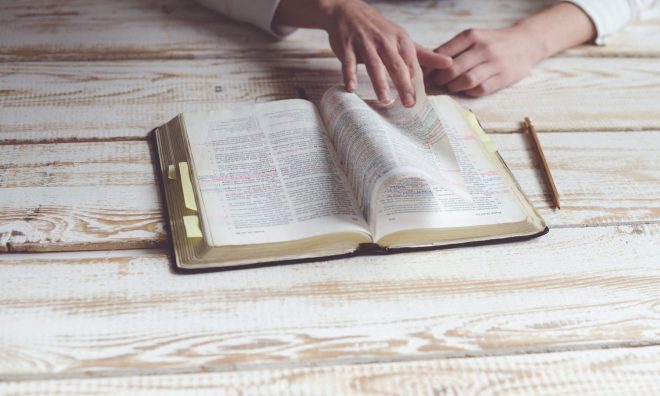
The Bible is the most important book in the world, because it is God telling the story. This story is more than an enjoyable yarn. It is the story about how God saved us and how he will make the creation new again. Theologians call that Salvation History. So, if someone asks, “What is the Bible all about?” The best answer is “It is all about Jesus.” Jesus himself tells us this. (John 5:39)

Knowing that the Bible is all about Jesus helps us understand its message and the place of each verse within it. On the surface, the Bible is a small library of sixty-six books with different messages. They can seem disconnected and at odds from time to time. By this rule, we come to see the Bible has one story with a beginning, middle, climax, and end, all tied to what Jesus did and will do to save us. It helps us to see that we are actually a part of this story. Unlike good fiction, this story is real news, not fake news. It actually has a two-part message for us — which we’ll take up in the next post.

So, by knowing that the Bible is all about Jesus, or said in more formal language, all theology is Christology, we can unlock the treasures of the Holy Scriptures. The Bible is not all about how to live a happy life in this world, although it can help us with that. It is not about predicting the future, like some giant puzzle or math problem. It is not the key to success and riches, nor is it about what we should do to be good people. In fact, it is not so much about what we do, but what God has done: In Christ, he made the world, sorrowed over its sin, set out to save the world, was made man in the womb of the Virgin Mary, lived a perfect life in our place, suffered, died, rose again, ascended into heaven and one day will return to raise us from the dead to live with God forever. As you read the Bible, then, ask yourself: what does this have to do with Jesus? You’ll be surprised how much it helps to hear what God is saying to you in his word.

Originally posted at What does this Mean? Blog: https://whatdoesthismean.blog

The posts in the blog What does this Mean? are now available at What does this Mean? | Rev. Robert E. Smith | Substack

Rev. Robert E. Smith
Pastor Emeritus
Fort Wayne, Indiana

©2018 Robert E. Smith. All rights reserved. Permission granted to copy, share and display freely for non-commercial purposes. Direct all other rights and permissions inquiries to cosmithb@msn.com

The Bible is God’s Word

[First in a series of posts on how to read the Bible]

Encore Post:

For most Christians, the first rule for understanding the Bible seems obvious. The Bible is God’s Word. Yet believing that God speaks to us in his own words and is the author of the Bible affects how we look at the Scriptures, how we approach them, what we expect from them, and the assumptions we make about what they say.

Because the Bible is God’s message to us, we believe that it is not fiction, a myth made up by people to explain the world, or something that is just very well-written words to inspire us or make us feel good — like a great movie, a catchy song, or an absorbing novel written by our favorite author. After they make us feel good and escape the world for a while, nothing changes, and life goes on. The Word of God, however, comes with the power of God to change our lives, brought to us by God’s own Holy Spirit. (see Romans 1:16-17, 2 Peter 1:16-21) It creates faith in hearts that do not believe and strengthens faith where it exists.

So, the clear teachings of the Bible are the final authority on everything it speaks about. When it says that all people are evil, not good, at heart, we believe that, even though our mind and culture tell us everyone is basically good. When it tells us God made the world in six days, we believe that, too, even if the world’s myth tells us the universe has always existed and developed over millions of years into what we now see. When the Bible tells us both that God decided to save us before he made the world, but if we reject him, we can lose our faith, we believe that too, even though it doesn’t make sense to us.

So, the rule is that we assume what the Bible teaches is true and use what is perfectly clear in it to understand what is not so clear.

Originally posted at What does this Mean? Blog: https://whatdoesthismean.blog

The posts in the blog What does this Mean? are now available at What does this Mean? | Rev. Robert E. Smith | Substack

Rev. Robert E. Smith
Pastor Emeritus
Fort Wayne, Indiana

©2018 Robert E. Smith. All rights reserved. Permission granted to copy, share, and display freely for non-commercial purposes. Direct all other rights and permissions inquiries to cosmithb@msn.com

Green Sundays: Ordinary Time After Pentecost and Trinity Sunday

Encore Post:

With the celebration of the Sunday of the Holy Trinity, the church’s liturgy shifts themes. From Advent to Pentecost, the focus of all lessons across all lectionaries is on the earthly ministry of Jesus. With the feast of the Holy Trinity, we consider what this means for our lives and the life of the Church. The color of all our paraments and vestments is green to reflect growth in our faith in Christ. Together with the Season of Epiphany, the Pentecost/Trinity Season is called Ordinary Time.

These Sundays are not called ordinary because there is something routine about them. It comes from the fact that each week in the season is numbered rather than named. It is the tradition of the church that each Sunday between Advent and Pentecost has a unique Latin name. You may have seen these in bulletins. The weeks of ordinary time, however, are numbered by the weeks after Epiphany, Pentecost or Trinity.

There are so many Sundays after Pentecost or Trinity that most lectionaries change the themes twice or more. Most make these changes at the celebrations of St. Lawrence Day and St. Michael and All Angels (Michaelmas). If your church uses Graduals between the Old Testament and New Testament lessons and/or a thematic alleluia verse, you will notice the shift. The Gradual and the alleluia verse changes.

In some American Lutheran churches, another feature of the liturgy in ordinary time is a shorter preface. The preface is the prayer of praise said by the pastor before the Sanctus. In these churches, the pastor goes directly from “that we should at all times, and in all places, give thanks unto You O Lord, Holy Father, Almighty, Everlasting God …” to “therefore with angels and archangels, and with all the company of heaven, we laud and magnify Your glorious name, evermore praising you and saying…” In the first half of the church year and on special days, they add a proper preface to it, related to the day itself.

Originally posted at What does this Mean? Blog: https://whatdoesthismean.blog

The posts in the blog What does this Mean? are now available at What does this Mean? | Rev. Robert E. Smith | Substack

Rev. Robert E. Smith
Pastor Emeritus
Fort Wayne, Indiana

©2021 Robert E. Smith. All rights reserved. Permission granted to copy, share and display freely for non-commercial purposes. Direct all other rights and permissions inquiries to cosmithb@msn.com

Pentecost

Encore Post:

The Feast of Pentecost was one of the celebrations established by God at Mount Sinai. Also called the Feast of Weeks, it was a kind of Thanksgiving in which people brought a sacrifice for the harvest of grain. It was fifty days after Passover, and also known by the Greek word for fifty days — Pentecost. Since many Jews and Godfearers traveled to Jerusalem from great distances to be there for Passover, many stayed for this feast as well.

On Pentecost, the wind caught the attention of the crowd. Wind and tongues of fire witnessed to the presence of the Holy Spirit. God kept his promise on that day when he gave himself — the third person of the Trinity — to the whole Church. No longer would the Holy Spirit come to just prophets, but to all believers, young and old, Jew and Gentile, of all nations and languages. They all spoke in the languages of the people gathered in Jerusalem, singing the praises of God. The church celebrates this day as a kind of birthday. It was that day the gospel began to spread to the ends of the earth.

Both the Hebrew and Greek words for Spirit mean “Wind.” The Holy Spirit hovered over the chaos before God created the Heavens and the Earth. When Solomon built the temple in Jerusalem, the Holy Spirit settled in the Holy of Holies as a cloud. When the Prophet Elijah fled to Mount Sinai, God sent a mighty wind, an earthquake, and a fire to get his attention. At the baptism of Jesus, the Holy Spirit appeared in the form of a dove.

The pouring out of the Holy Spirit on the Day of Pentecost fulfilled prophecies in the Old Testament (Joel 2:28-32), by John the Baptist (Matthew 3:11), and by Jesus (Acts 1:5). By baptizing His people with the Holy Spirit, Jesus gave them the power to witness to God’s love. He provided them with a counselor to lead and guide them. Just like the prophets of the Old Testament, every one of God’s children now can proclaim His praises to everyone.

Originally posted at What does this Mean? Blog: https://whatdoesthismean.blog

The posts in the blog What does this Mean? are now available at What does this Mean? | Rev. Robert E. Smith | Substack

Rev. Robert E. Smith
Pastor Emeritus
Fort Wayne, Indiana

©2018 Robert E. Smith. All rights reserved. Permission granted to copy, share, and display freely for non-commercial purposes. Direct all other rights and permissions inquiries to cosmithb@msn.com

Half Time in the Church Year

Encore Post: As a liturgical church, the Lutheran Church organizes its worship life around the church year, a calendar of themes, Scripture readings, worship services, practices, symbols, and prayers. It shares much of this organization with other liturgical churches and even some non-liturgical faith traditions.

The most general division in the Church Year is the semester. Tradition divides the church calendar into two parts. The first begins with the first Sunday of Advent and ends with the Day of Pentecost. It is known by several names. Most often, it is called either the Festival Season or the Semester of our Lord. During this half-year, the church focuses on the life and earthly ministry of Jesus.

After the Day of Pentecost, the second half of the year, known as the Semester of the Church, begins. It is also called Ordinary Time, the Season of Pentecost or the Season of Trinity. The focus is on how Christians should live in this fallen world. Some pieces of the liturgy change at about week ten in the season of Pentecost and then again after the Feast of St. Michael and All Angels. The list of readings, known as the lectionary, shifts from a list geared to the reading’s place in the season (nth Sunday in Lent, etc.) to one based on its position on secular calendars. These sets of readings are called Proper 1, Proper 2, Proper 3, etc. This is to keep the readings on the same Sunday, more or less, each year.

This means that a bit of variety is always part of our worship, even in its most traditional forms. As we receive God’s gifts, we hear most of the Scripture read to us. At the same time, we study and pray in unity with the church in every time and place.

Originally posted at What does this Mean? Blog: https://whatdoesthismean.blog

The posts in the blog What does this Mean? are now available at What does this Mean? | Rev. Robert E. Smith | Substack

Rev. Robert E. Smith
Pastor Emeritus
Fort Wayne, Indiana

©2018-2023 Robert E. Smith. All rights reserved. Permission granted to copy, share, and display freely for non-commercial purposes. Direct all other rights and permissions inquiries to cosmithb@msn.com

Friedrich Wyneken’s Missionary Journey

Encore Post: On October 2nd, 1838, Young circuit rider Friedrich Wyneken set out along the Goshen Road towards Elkhart and South Bend (Now US Route 33). A severe cholera epidemic held Western Ohio and Northern Indiana in its grip at that time. Wyneken reported, “On the whole, from a human point of view, the time in which I traveled was an unfortunate time to work for God’s kingdom. Sickness raged everywhere. Often I entered a town where not one house was without a sick person: In many homes, everyone was sick, so that often my gatherings were very small.”

In Benton, Indiana, a town with forty German families in 1838, this deadly disease kept the size of the congregation down to twelve people. These settlers begged the missionary to return to them later, since they hoped to form a congregation. Promising to visit again, Wyneken continued on toward South Bend. At the junction of Goshen Road and the east/west section of the Michigan Road, near the town of Elkhart, and a few miles farther west at Harris Prairie, the missionary stopped to preach. He discovered many Germans in the area and resolved to return to form congregations.

Pressing further west along the Michigan Road, he traveled through South Bend and La Porte to Michigan City. Finding no German Lutherans to the west, he returned to South Bend and preached there on the 12th of October to a congregation of six hastily gathered people. Moving farther east, Wyneken preached again at Harris Prairie on October 13 and at Elkhart on the 14th. These communities asked him to return once more and help them to organize their congregations. Agreeing to do this, the missionary took the Michigan Road northeast to Mottville, Michigan, where he preached on the 16th and visited the sick. He baptized several children there the next day.

Originally posted at What does this Mean? Blog: https://whatdoesthismean.blog

The posts in the blog What does this Mean? are now available at What does this Mean? | Rev. Robert E. Smith | Substack

Rev. Robert E. Smith
Pastor Emeritus
Fort Wayne, Indiana

©2018 Robert E. Smith. All rights reserved. Permission granted to copy, share and display freely for non-commercial purposes. Direct all other rights and permissions inquiries to cosmithb@msn.com

Friedrich Wyneken in Indiana

Encore Post: Friedrich Wyneken arrived at the settlement of Friedheim, near Decatur, Indiana, on September 20th, 1838. The first German he met in Indiana received the missionary with suspicion. “If you are an honest pastor, then go to that house over there. A very sick man lies in it,” the woodsman challenged. “If you are something else, like most pastors coming from Germany, then go over there to the rich wagonmaker!” “Nevertheless, I’d love to see the sick man first,” Wyneken quipped and then carried through. At this sick man’s home, he learned of Karl Friedrich Buuck, the leader of Jesse Hoover’s Adams County congregation and the pastor’s future father-in-law.

Wyneken ministered in the area for six days before riding north along the Decatur Road to visit Fort Wayne and New Haven. In 1838, Fort Wayne was a small but growing town on the Wabash-Erie Canal. This community of fifteen hundred sat at the portage between the Wabash and Maumee rivers, the only passage between the Great Lakes and the Mississippi River. At the summit, overlooking the merger of the Maumee’s two sources, Fort Wayne was the focal point of the effort to create a continent-wide water transportation system. By 1837, the Wabash-Erie Canal was completed to Logansport, a growing community on the Michigan Road. This road stretched north to South Bend and Michigan City and south to Indianapolis, Madison, and the Ohio River. Because of its geography, Fort Wayne grew despite the economic depression that followed the Panic of 1837. The Northeast corner of Indiana quickly became a destination of choice for German emigrants seeking a new home. Fort Wayne was an ideal location for a circuit rider charged to “gather scattered Protestants.”

Shortly after Wyneken reached Fort Wayne, St. Paul’s of Fort Wayne and Zion in Friedheim called him to serve as their resident pastor. The young pastor explained that he could not accept such a call without the permission of the Pennsylvania Ministerium. Since the missionary needed to continue his survey of Indiana, he suggested that the church council of Fort Wayne’s St. Paul Congregation write to the Mission Society for his release. Wyneken promised to return in four weeks to receive the Mission Society’s instructions. On October 2nd, Friedrich Wyneken once more mounted his horse and headed north into the forest.

Originally posted at What does this Mean? Blog: https://whatdoesthismean.blog

The posts in the blog What does this Mean? are now available at What does this Mean? | Rev. Robert E. Smith | Substack

Rev. Robert E. Smith
Pastor Emeritus
Fort Wayne, Indiana

©2018 Robert E. Smith. All rights reserved. Permission granted to copy, share, and display freely for non-commercial purposes. Direct all other rights and permissions inquiries to cosmithb@msn.com

Pastor Wyneken’s Lima, Ohio Ministry


Encore Post: On September 10th, 1838, Friedrich Wyneken stopped in Lima, Ohio, for supplies. There he met a German, who pleaded in tears with Pastor Wyneken to stay in the area awhile and preach to his countrymen and women, many of whom had not heard God’s Word or received the Lord’s Supper in years. With his heart breaking, Wyneken could not pass them by.

For eight days, he conducted services in Lima, in Putnam County to the north of Lima, and in Wapakoneta, in Auglaize County, to the south. With wonder, he reported that he preached nine times in these settlements and baptized fifteen people. Thirteen of them were older children, one an eighteen-year-old young woman, and another, the forty-year-old mother of two. He even confirmed a young married man, catechized but never communed. With joy, Wyneken wrote to Haesbaert:

“The people were so delighted to receive God’s Word and the Bread of Life once more, that I couldn’t thank the Lord enough for His love, because, at the very beginning of my ministry, He had led me to such hungry hearts.

Very reluctantly, young Pastor Wyneken left Ohio for Adams County, Indiana. “I regret now, that I didn’t stay longer with the Germans in western part of the State of Ohio,” he wrote the Executive Committee of the Pennsylvania Mission Society, “and did not visit more settlements, because there are no pastors there, and also, as far as I can tell from what I’ve been told, none have been visited by a circuit rider to date”

Impelled by a sense of duty, he forced himself to travel northwest on the Piqua Road, along the St. Mary River toward Fort Wayne. Wyneken’s route took him past Willshire, Schumm, and Van Wert, settlements he would later serve from Fort Wayne and Decatur, beginning in 1839.

Originally posted at What does this Mean? Blog: https://whatdoesthismean.blog

The posts in the blog What does this Mean? are now available at What does this Mean? | Rev. Robert E. Smith | Substack

Rev. Robert E. Smith
Pastor Emeritus
Fort Wayne, Indiana

©2018 Robert E. Smith. All rights reserved. Permission granted to copy, share and display freely for non-commercial purposes. Direct all other rights and permissions inquiries to cosmithb@msn.com

Wyneken Wanders in the West

Encore Post: “After you had left me at the train station in Havre De Grace,” Wyneken wrote from Fort Wayne to his friend, Johannes Häsbärt, “I felt like a stranger in a strange land for the first time.” But Fritz was not a man to stay lonely for long. He continued:

This feeling lasted for a day, until I arrived at Zelienople, not far from Pittsburgh. I bought a horse there and trotted out through the forested land, cheerfully and joyfully. I felt much better then. Whether I was alone or traveling in the best of  company, I could, any time I wanted to, merely pull out my beloved Paul Gerhardt book or New Testament and put them back in my pocket when I was done. Sometimes my heart was so full of the sweet, cheerful grace of my Savior, that I had to laugh, to sing loudly, to have a joyful heart and to praise my Lord.

The frontier forests of Ohio and Indiana moved many first-time travelers to awe and wonder, even if few of them broke into song. Hugh McCulloch, a future United States Treasurer, a young lawyer in 1833, described the Michigan Road as follows:

It was perfectly straight, and the noble trees, nearly a hundred feet in height, stood on either side of it like a protecting wall. The birds were sighing blithely, and although my horse was my only companion, the wildness and novelty of the scene acted upon me like a tonic.

Wyneken set forth due west across Ohio, along the present route of U.S. Highway 30, towards Adams County, Indiana, and Jesse Hoover’s orphaned congregations. Along the way, Fritz first experienced legendary Western hospitality, often being given directions, company, refreshments, and lodging.

The journey proved long and hard for the young pastor, who was not accustomed to riding such long distances in the wilderness. The roads of the frontier were not much better than trails, often still filled with tree stumps. The late summer temperatures weighed heavily on most Germans, unaccustomed to the heat. These conditions slowed Wyneken down, giving him much time to wonder if he was strong enough to meet the challenges ahead. He drew comfort that God was indeed strong enough to use him to seek the lost. Eager to bring the Gospel to scattered pioneers, he rode on.

Originally posted at What does this Mean? Blog: https://whatdoesthismean.blog

The posts in the blog What does this Mean? are now available at What does this Mean? | Rev. Robert E. Smith | Substack

Rev. Robert E. Smith
Pastor Emeritus
Fort Wayne, Indiana

©2018 Robert E. Smith. All rights reserved. Permission granted to copy, share and display freely for non-commercial purposes. Direct all other rights and permissions inquiries to cosmithb@msn.com