Church Words: Apostolic

[Eighth in a series of posts on church words] Encore Post: “I believe in one Holy, Christian and Apostolic Church,” we confess when we recite the Nicene Creed in worship. Most Christians understand what we mean when we say, “one Holy, Christian..,” but what do we mean by Apostolic?

As you might suspect, the word comes from the word Apostle (Greek: ἀπόστολος, someone sent out, an ambassador). Jesus appointed twelve apostles. After the Ascension, the eleven surviving apostles appointed Matthias to take the place of Judas. Jesus appeared personally to Saul of Tarsus on the road to Damascus to appoint him also as an apostle. We call the Church “Apostolic” because it is built upon the teaching of the disciples, which we have today in the books of the New Testament. So, to say the Church is Apostolic is to say that it is built upon the Bible — the foundation of the prophets and apostles, with Christ Jesus as the cornerstone. (Ephesians 2:19-20)

The Roman Catholic, Eastern Orthodox and Anglican (Episcopal) traditions see it differently. For them, the phrase means that the Church is shepherded by the spiritual descendants of the apostles. This is called apostolic succession. When a pastor or bishop is ordained, the pastors present place their hands on the candidate and bless him. This ancient tradition confirms to all present that God has set aside the man to serve as a pastor. There is an unbroken line of pastors laying hands upon new pastors stretching back to the Apostles themselves.

Since the Scriptures do not teach this concept, Lutherans do not attach any sacramental value to ordination and this laying on of hands. We continue the practice, although we do not require the presence of a bishop to make the ordination valid. We find it to be a meaningful symbol of support from one generation of pastors to the next and a witness to the fact of the pastor’s call.

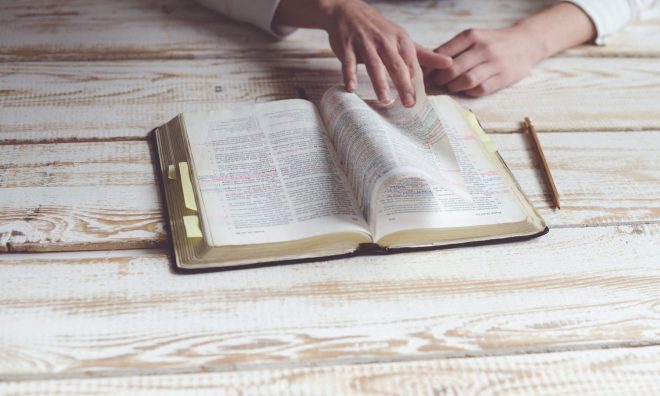
So, when we confess that the Church is Apostolic, we commit ourselves to the Holy Scripture. We pledge to believe, teach and confess what it proclaims to us. In doing so, we remain in fellowship with the whole church of all times and places..

Originally posted at What does this Mean? Blog: https://whatdoesthismean.blog

The posts in the blog What does this Mean? are now available at What does this Mean? | Rev. Robert E. Smith | Substack

Rev. Robert E. Smith
Pastor Emeritus
Fort Wayne, Indiana

©2018 Robert E. Smith. All rights reserved. Permission granted to copy, share and display freely for non-commercial purposes. Direct all other rights and permissions inquiries to cosmithb@msn.com

Church Words: Congregation

[Seventh in a series of posts on church words]

Encore Post:

From the very beginning of the church, Christians gathered together to read scripture, sing the praises of God, hear their pastors preach, and celebrate the Lord’s Supper. This should not surprise us — Jews had been doing that for centuries, beginning sometime during the Babylonian Exile. Those gatherings became known in Greek as συναγωγή — Synagogues — meaning “to lead, gather together; assemble.” The New Testament calls these groups ἐκκλησία — churches — literally “called up” (to assemble). The Greeks used the word for civil assemblies and the calling up of militias. The word “Congregation” is the Latin translation of these words and means “to gather together.”

The church continued to worship after the pattern of the synagogue, with two exceptions — they met for worship on the Lord’s Day (Sunday), not the Sabbath (Saturday), because it was the day on which Christ rose from the dead. They also added readings from the Gospels and letters from the Apostles and other respected leaders. These are the books that would be very quickly (for the most part) recognized as Holy Scripture, along with the Old Testament.

For the first generation of Missouri Synod leaders, the distinction between the local congregation and the universal church was crucial. They used the German word Gemeinde only for a local church and the word Kirche for the universal church. They deliberately did not call their church body a church. They called it a Synode — a Synod.

Why were they so picky? Because most of the action in God’s kingdom is not done in Church Bodies, which get most of the press, but in the local congregation. They represent the universal Church, the invisible Church. On behalf of the Church, congregations baptize, teach the Word of God, celebrate the Lord’s Supper, use the Office of the Keys to forgive and retain sins, and extend God’s call to men to exercise the Office of the Holy Ministry and other church workers to support it. The work of synods is done as local congregations band together to do things no one can do alone.

Congregations are much more than social clubs or private charities. They are God’s kingdom on earth, proclaiming the gospel and giving his gifts to all. In them, the lost get to meet Jesus, and through the word preached by them, people are saved. So come! God is waiting to meet you — and we are too!

Originally posted at What does this Mean? Blog: https://whatdoesthismean.blog

The posts in the blog What does this Mean? are now available at What does this Mean? | Rev. Robert E. Smith | Substack

Rev. Robert E. Smith
Pastor Emeritus
Fort Wayne, Indiana

©2019 Robert E. Smith. All rights reserved. Permission granted to copy, share and display freely for non-commercial purposes. Direct all other rights and permissions inquiries to cosmithb@msn.com

Church Words: Catholic

[Fourth in a series of posts on church words]

Encore Post:

“That’s Catholic!” you may hear someone say when they see a Lutheran make the sign of the cross, a crucifix hanging in the sanctuary of a Lutheran church, a pastor wearing a clerical collar, or another traditional practice they’ve not seen Lutherans do. What they’re thinking is this means the Lutheran in question is acting like a Roman Catholic. They are often unaware that Lutherans have had these practices since the time of the Reformation or that the word catholic did not originally refer to the Christian tradition headed by the Pope. The word catholic has been used since the early church to refer to the whole Christian Church.

The word catholic is from the Greek word καθολικός (literally “according to the whole”) and means “universal.” So, if we wanted to be sarcastic, we could answer the objection “that’s catholic,” “Why, yes! The whole church does it!” The early church would use the phrase “catholic church” to mean the invisible church. When someone wanted to talk about the faith of the whole church and not just a single congregation or region, they would call it the “catholic faith.”

Soon, the word was used to separate false teachings and false teachers from orthodox teachings and leaders. The true faith was called the “catholic” or “orthodox” faith. False teachings were called heresies (literally “other teachings”), and the groups that promoted them were called schisms (literally “divisions”). At the time of the Reformation, Luther’s opponents quickly charged him and his associates with not being “catholic” but heretical. They labeled them “Lutherans” as an insult (meaning followers of Luther and not Christ) and themselves as Catholics. From the very beginning, Luther and Lutheran theologians defended themselves by saying they were the true catholics, teaching the orthodox faith as it was taught and practiced from the beginning. As you might guess, they did not win this argument, even though they were right.

You will occasionally run into the word in Lutheran circles, even today. You will sometimes see it in the creeds — especially the Apostles’ Creed, which reads in Latin and Greek (translated) “one holy, catholic and apostolic church.” Martin Luther used the word “Christian” because existing German translations did. Theologians will still use the term from time to time when emphasizing that we believe and teach what the church has always believed. So, don’t panic if you are asked to confess that you believe in the catholic faith — because you do!

Originally posted at What does this Mean? Blog: https://whatdoesthismean.blog

The posts in the blog What does this Mean? are now available at What does this Mean? | Rev. Robert E. Smith | Substack

Rev. Robert E. Smith
Pastor Emeritus
Fort Wayne, Indiana

©2019-2026 Robert E. Smith. All rights reserved. Permission granted to copy, share, and display freely for non-commercial purposes. Direct all other rights and permissions inquiries to cosmithb@msn.com

Church Words: Church Invisible, Visible, etc.

[Second in a series of posts on church words]

Encore Post:

Jesus told Peter that he would “build [his] church, and the gates of hell shall not prevail against it.” (Matthew 16:18) St. Paul described this church as ” one body and … you were called to the one hope that belongs to your call — one Lord, one faith, one baptism, one God and Father of all, who is over all and through all and in all.” (Ephesians 4:4-6) In many other places, and through many metaphors, Scripture is clear that there is only one Church and that it lasts forever. Theologians call the church catholic (the Latin word for universal — that word is for yet another post!)

Another term we use for this Church is the invisible Church. St. Augustine coined the term because we really do not know for sure who is a Christian and who is not. Only God, who can see what is in a person’s heart, knows that. Martin Luther puts it this way: “These two belong together, faith and God. That now, I say, upon which you set your heart and put your trust, is properly your god. ” (Large Catechism 1.1.3)

Yet the church does not look like it is one at all. ” Tho’ with a scornful wonder, men see her sore oppressed, by schisms rent asunder, by heresies distressed ” (The Church’s One Foundation, Stanza 3). There are thousands of denominations, theological positions, and opposing camps. There are evil people who pretend to be holy among them. There are religions that pretend to be Christian, but in truth, are far from it. And in the hearts of every Christian living in this world, sin itself still lives and pollutes hearts and minds. We’ve met the enemy — and it is us. This is the church we can see. Theologians call it the visible church. In the visible church, both the saved and the lost live together. We take people at their word when they say they believe, but many are just acting. (ὑποκριτής = hypocrite = Greek word for actor)

Yet even in the visible church, signs of the true, invisible church can be seen. Where the Gospel is purely preached and the Sacraments rightly administered, there the true Church is at work. We call these the marks of the church. There Christ builds his church — on the rock of His Word and trust in it. Go where you hear his voice, and you are at home — even on earth!

Originally posted at What does this Mean? Blog: https://whatdoesthismean.blog

The posts in the blog What does this Mean? are now available at What does this Mean? | Rev. Robert E. Smith | Substack

Rev. Robert E. Smith
Pastor Emeritus
Fort Wayne, Indiana

©2019-2024 Robert E. Smith. All rights reserved. Permission granted to copy, share and display freely for non-commercial purposes. Direct all other rights and permissions inquiries to cosmithb@msn.com

Who do you think you are?

[Seventy-first in a series of posts on Martin Luther’s Small Catechism]

Encore Post:

“What are you going to be when you grow up?” American adults love to ask children. We teach our youth to dream. If you work hard enough, there is no limit to what you can do or be. You might even be President of the United States someday! We grow up trying to find ourselves. And when we get to age eighteen, we go off to “find ourselves” in the world or college. Yet in doing so, we miss some very important things we already have and a call, a vocation, every Christian has. It begins with knowing not who you are, but whose you are.

You see, you belong to God. When you were lost in the darkness of sin and death, Jesus came and sought you to be his holy bride. With his own blood, he bought you, and for your life, he died. Not with silver or gold were you bought back from sin, the devil, and death, but with his precious blood and his suffering and death. He did this for a purpose — not that you would move along the path to the American Dream or self-fulfillment, but that you would live with him in his kingdom forever.

It is in his kingdom that we have our most sacred call. We are called to be a royal priesthood, a holy nation, set apart to be his favorite possession. (1 Peter 2) A priest is someone who stands between a god and his people. His role is to bring the god’s instructions and blessings to people and their prayers and their sacrifices to the god. Our role as the nation of the priests of the Holy Trinity is to bring the good news of salvation to the nations and to pray for them, calling on God to have mercy on them.

This Priesthood of All Believers, as Martin Luther called it, has received God’s call to forgive sins for Christ’s sake, to proclaim the good news to all the ends of the earth, to baptize and to teach them. Together we have done these things for 2000 years and counting. As God’s church, we primarily do this through the men God has called to represent us — our pastors. Yet we do not sit back and watch. We are all his priests, his messengers, his witnesses to everyone. This is who you really are.

Originally posted at What does this Mean? Blog: https://whatdoesthismean.blog

The posts in the blog What does this Mean? are now available at What does this Mean? | Rev. Robert E. Smith | Substack

Rev. Robert E. Smith
Pastor Emeritus
Fort Wayne, Indiana

©2019 Robert E. Smith. All rights reserved. Permission granted to copy, share and display freely for non-commercial purposes. Direct all other rights and permissions inquiries to cosmithb@gmail.com

Thy Kingdom Come

Encore Post: [Forty-Two in a series of posts on Martin Luther’s Small Catechism] When we pray the Lord’s Prayer, we state our hope and belief that God’s Kingdom is different from the kingdoms of the world. As Jesus says to Pontius Pilate, “My Kingdom is not of this world.” But certainly it has entered this world now and the world will see it in all its fullness when Jesus returns to judge both the living and the dead.

God’s Kingdom comes to us a couple of ways. God’s Kingdom comes to us through the Proclamation of the Word and Faith. Another way to say it is that God’s Kingdom comes to us when and where Jesus promises to be for the forgiveness of our sins in the divine service. Finally, what we see currently only by faith will be unveiled to the world, and God’s Kingdom will be fully known.

God’s kingdom is not like the kingdoms of the world. God’s kingdom is a spiritual kingdom and it must be distinguished from the civil realm. God works in terms of the Gospel, that in Jesus Christ’s death on the cross atones for the sins of the world. Currently God’s Kingdom looks quite humble. Even the King rides to his throne on a donkey, not some regal warhorse. His crown in this world was one of thorns. He governs not with an iron fist, but through his ministers who are called to preach His Gospel and administer his gifts- namely Baptism, Bread and Wine, His body and Blood- to his faithful.

The civil realm works in terms of fear and power, certainly not the Gospel, but rather Law. Of course, as we pray this petition, we also express the desire for the Lord to bless our civil kingdoms (governments) with His mercy and grace that we might live in peace. And we should obey the laws of the government as long as obeying the laws does not cause us to sin. We also acknowledge rightly that God does not intend to use the Gospel to overthrow secular government and public order. We reject that before the resurrection of the dead, saints and righteous people will possess a secular kingdom.

So, we, as Christians, see ourselves in two kingdoms. And we continue to pray this petition as fervently as ever in anticipation when the Lord will return to usher and reveal His Kingdom fully.

Originally posted at What does this Mean? Blog: https://whatdoesthismean.blog

The posts in the blog What does this Mean? are now available at What does this Mean? | Rev. Robert E. Smith | Substack

Rev. Jacob Hercamp
Christ Lutheran Church
Noblesville, Indiana

©2019 Jacob Hercamp. All rights reserved. Permission granted to copy, share and display freely for non-commercial purposes. Direct all other rights and permissions inquiries to cosmithb@gmail.com

Why Memorize the Catechism?

Encore Post: [Second is a series of posts on Martin Luther’s Small Catechism]

The Catechism contains the chief parts of the faith. At the heart of it are the big three pieces: the 10 Commandments, the Apostles’ Creed, and the Lord’s Prayer. Dr. Luther also attached Confession, the Sacrament of Holy Baptism, and the Sacrament of the Altar. Luther wanted his students to know the catechism by heart.

The Catechism ought to be learned out loud for memory’s sake. It should be memorized by the hearers as it is used in the divine service. Four pieces of the catechism are mainstays within the liturgy (Apostles Creed, Lord’s Prayer, Confession, and Sacrament of the Altar). The Ten Commandments are effectively understood to be in play when we confess our sins to God. Luther gives us that instruction in his explanation when asking, “What sins should we confess?” The Sacrament of Baptism still occurs within the confines of the Divine Service as well, but unfortunately, baptisms appear to be fewer and farther between. However, we should not downplay baptisms, as at every moment of the Divine Service, we are reminded of the gifts He gives us through our baptisms into Christ Jesus.

We memorize the catechism because it is, in fact, nothing other than the Words of Christ. The Ten Commandments and the Lord’s Prayer are taken directly from Scripture. The Creed is effectively the entire story of the Bible distilled into 3 articles of faith: the confession of Creation, Redemption, and Sanctification in and through the work of the blessed Trinity: Father, Son, and Holy Spirit. We are granted faith as we hear the word of God revealed to us in the Catechism. The Catechism, then, is perhaps the greatest place to begin when teaching the faith to the littlest among us, as well as the young in the faith.

The Word of God is important, and we ought to be in the Word as often as possible. The Catechism ought to be memorized and used by the faithful so that it becomes embedded in our hearts. If it is not used in our daily devotional life, the words of the catechism will quickly leave us. But if the words of the catechism are memorized or learned by heart, the vocabulary of the catechism informs our faith and entire life. It is after the words of our Lord for the instruction in the faith.

Originally posted at What does this Mean? Blog: https://whatdoesthismean.blog

The posts in the blog What does this Mean? are now available at What does this Mean? | Rev. Robert E. Smith | Substack

Rev. Jacob Hercamp
Christ Lutheran Church
Noblesville, Indiana

©2019 Jacob Hercamp. All rights reserved. Permission granted to copy, share and display freely for non-commercial purposes. Direct all other rights and permissions inquiries to cosmithb@msn.com

Who are You, John the Baptist?

Encore Post: “Who are you?” That was the question the Jews had when John came on the scene. John confessed and did not deny, but confessed emphatically that he was not the Christ. Okay, that makes sense. He must be Elijah then, for Elijah was said to return according to the prophet Malachi. But John’s answer to that question had to leave the Jews scratching their heads. He said he wasn’t Elijah either, at least not Elijah returned from Heaven. Perhaps he was the prophet who was to come, the Prophet like Moses. Nope, that’s not it either. So, John was a perplexing figure, to say the least.

They couldn’t figure him out. They seem to be on the right track to some extent, but just can’t seem to connect the dots. Especially when John speaks of himself as the voice crying in the wilderness, “Make straight the way of the Lord.” While the Pharisees wanted to know more about John, John didn’t seem to care much about making himself known. He had one job. And he was set on doing it well. He was proclaiming the One who was to come. That’s the message that John was to proclaim, not preach himself but Christ.

John preached a baptism of repentance for the forgiveness of sins, and that one was coming who would baptize with the Holy Spirit. The work of making the Lord’s way straight was beginning. It was falling into place. For the Lord was coming soon to the river Jordan, and His ministry was quickly beginning. Rejoice!

That should have been the first thought in the heads of the Jews. The one longed for, the one who would set everything right, would finally come. And many heard the news of John and took it to heart. For they came in droves to be baptized by him, confessing their sins, being made ready for the coming of the Lord. For with his coming, He would bring good news and liberty, proclaiming the year of the Lord’s favor, that the warfare between God and man was over, that sins would be dealt with by God once and for all. Rejoice!

But the Jews did not rejoice. No, they played the part of John 1. Jesus came to his own and they received them not. John the Baptist makes it sound like Jesus is actually in the midst of the crowd listening to the conversation that very day, when he says, “I baptize with water, but among you stands one you do not know, even he who comes after me, the strap of whose sandal I am not worthy to untie.” Jesus was unknown to these Jews, a face easily forgotten in the sea of people around them out in the wilderness. But to those who heard and believed the preaching of John, they were made sons and daughters of God.

John tries with all his might to make sure, once and for all, that everyone who hears his voice understands that He is not the Christ. Even though John came in the spirit and power of Elijah, and Jesus in the synoptic Gospels, leads his disciples to understand John to be the fulfillment of Malachi 4, John never says that He is Elijah. That would be too much for the people. They would follow John rather than follow Christ. And in fact, even though John worked hard to confess that he was not the Christ, there is still a small remnant of people who hold to John the Baptist as the Messiah to this day. You can learn about some of this in the book of Acts, where a couple of men who were baptized into John’s baptism but had not understood John’s preaching to trust in the one who was to come after him, Jesus.

John’s purpose is solely to exhort his hearers to trust in the One who is to come, Jesus Christ. “Behold Him, the Lamb of God who comes to take away the sin of the world.”

John was bold and confident. And could be based on God’s Word. John trusted the promises of God, he himself being the fulfillment of the prophecy of Isaiah 40, and also the promise that he would have the spirit and power of Elijah. He certainly has the voice and appearance down, wearing rough camel-hair clothing and eating locusts and honey. And he desires you to trust boldly in the promises that God has made. May we be so bold as to hold to every word that comes from the Lord.

Good news would come from the one upon whom the Spirit of God would descend and remain. You have John’s own testimony, a few verses later, confirming that when Jesus came to be baptized, numbering himself with the transgressors, that He saw the Spirit of God descend upon him and remain. You have Jesus’ own words in Luke 4 saying that this prophecy was being fulfilled as the people gathered in the synagogue heard Jesus speak to them. Yet, they acted like the Pharisees and would not believe His Words. And then you have Jesus’ own work healing the sick, the lame, and forgiving their sins, too. What do you do you see and what do you hear? The Lord’s favor was coming and has come in Jesus! Rejoice!

He has come to bring you good news, but he brings the word of restoration. He came to rebuild and restore, to reconcile and bring peace. Isaiah 61 looks forward to the time when the exiles will be brought home. Jerusalem would be destroyed, burned to the ground; it would be devastated. In the return from exile, the Jews would rebuild, yes, but it would be a shell of its former glory. The real temple would come when Jesus came and dwelt in their midst, just as he did, and the temple of his body would be destroyed, but in three days it would be raised back up. God would dwell with humanity forevermore. That God and man are reconciled to one another by the One John proclaimed would come.

John was not trying to fool the Pharisees, the Jews, or anyone else. He was pretty upfront with them. Search the Scriptures, test His words against them, see that John is there fulfilling the purpose he was sent to perform. He is pointing to Christ, not to himself. Don’t worry too much about knowing John is, but rather worry about knowing Christ!

John says what He says because He is not the main attraction, nor does He want to be! “You yourselves bear me witness, that I said, ‘I am not the Christ, but I have been sent before him.’ The one who has the bride is the bridegroom. The friend of the bridegroom, who stands and hears him, rejoices greatly at the bridegroom’s voice. Therefore, this joy of mine is now complete. He must increase, but I must decrease.”

John rightly testifies of Jesus being the bridegroom, and He bears the gifts of the bridegroom for his bride. “Rejoice and be glad for your Bridegroom has come!” says John. And He comes with his robe of righteousness for you! These are your words and John’s words to say, “I will greatly rejoice in the Lord; my soul shall exult in my God!” Why? For He comes bearing my salvation. He comes to set me free. As the beautiful hymn Wake Awake For Night is Flying says in the 2nd stanza, “Zion hears the watchmen singing, And all her heart with joy is springing; She wakes and rises from her gloom.” Rejoice!

You heard John’s forthright preaching. How He calls you to account for your sins, especially the ones that are stuck to the bottom of the pot that is your heart, but once He has scraped them and agitated your hearts, John also points you to the remedy of all your sins. Your bridegroom, Jesus. He comes to you, cleansing you from your sins. We look to the font, the place where water and word washed over us, where Christ calls us His own. We look to the white garment given to us then, reminding us of the pure robe of righteousness that Christ has put on us. And we can continually remember our baptisms throughout all our days, coming to Christ, confessing our sins daily, repenting of them, and trusting His promise to forgive our sins. That is the baptismal life in a nutshell. Continually recognizing our failings to keep God’s laws and to be in alignment with them, and receiving from God mercy and forgiveness, and trying again. Our life is one of repentance. Our robes don’t always look white and pristine. Most time they are as black as coal.  But rejoice! Yes, rejoice for Christ comes to cleanse you to raise you up, and bind up your broken hearts, and repeat to you the blessed Good News that He has come and He has come to save you.

And He comes bearing you every good gift. He comes to give you Himself, His own body and blood that is the new covenant, the everlasting covenant. Rejoice! Know and believe the good news that the Lord Jesus has come to save you from sin and death. You who have been sinned against by your loved ones, who have been put down, those of you ashamed of your sins that have come to light, and those that could come to light. Know you have been set free by the Bridegroom who willingly laid down his life for his bride and cleansed her with his own blood. He paid the dowry to take you as His bride with his own blood. You are far more precious to Him than any silver or gold, so he pays with his body and blood. And now he comes to you, giving to you that same body and blood to strengthen your faith in these dreary days, that you might cling ever so more tightly to His promise of His coming again. Eat and Drink believing His Words, receive His peace and comfort that comes with knowing that He comes to you that you might be rescued from the clutches of Satan.

The promise will never be broken. Just like the prophecies that He would come, so He comes known to you in His Word and Sacraments. As John the Baptist says, “Behold Him, Yes here. For Christ is in your midst now. Rejoice, O Bride of Christ, for your fortunes have been restored, and He has come and done glorious things in your midst. He has come to save you.

In the Name of the Father and of the Son and of the Holy Spirit. Amen.

Originally posted at What does this Mean? Blog: https://whatdoesthismean.blog

The posts in the blog What does this Mean? are now available at What does this Mean? | Rev. Robert E. Smith | Substack

Rev. Jacob Hercamp 
Christ Lutheran Church
Noblesville, Indiana

©2020 Jacob Hercamp. All rights reserved. Permission granted to copy, share and display freely for non-commercial purposes. Direct all other rights and permissions inquiries to cosmithb@gmail.com

Last Things #11: Rapture and Tribulation and Millennium — Oh My!

[Twentieth in a series of posts on Last Things] Encore Post: Many of our evangelical brothers and sisters are fascinated by Biblical prophecy. Seeing the evil around us, they are convinced that we are living in the very last years and months before Christ returns to raise the dead, bring an end to sin, death and the power of the devil, gather all in the final judgement and begin the marriage feast of the lamb that has no end. They are not alone — in every period, Christians were convinced they were living in such times — even St. Paul and Martin Luther!

What makes their view unique in the church’s history is that they accept a theological view called Dispensationalism, a Christian school of thought that was born in the 1800s. It adopted the ancient view that Christ would reign on earth literally for 1000 years after he returned in glory. It was set in the way of looking at history, inspired by the 19th-century cultural movement known as Romanticism. Dispensationalism was developed by Charles Nelson Darby, D. L. Moody and C. I. Scofield.

Dispensationalists believe God divided the world into seven dispensations (also called economies and administrations). In each age, God supposedly revealed himself in different ways. Salvation was offered according to different plans for each age (for example, under the Law of Moses, salvation was by works, but in the church age, by grace), and humans were held accountable to the set of rules for that age. They get to these views by treating prophecies written in figurative and symbolic language at face value and using the interpretations they discover to understand, in a complex way, the simple and clear words of Jesus and the apostles.

For them, this age will end when the events predicted in prophecy occur. They look to current events to fulfill these prophecies, treating the Bible as a giant algebra problem. Some have used such calculations to predict end-time events. Among these are the rapture, when all true Christians will suddenly be removed from the world, leaving only unbelievers, the Tribulation, when they will be punished, and those who come to faith, seeing these events are persecuted, and the Millennium, when Christ and the church will rule the world for a thousand years. Two problems with this: Christ promised he would return suddenly, and the last judgement follows immediately (so the Bible is not an algebra problem), and these versions of a rapture, a millennium, and a tribulation are not in the Bible.

Originally posted at What does this Mean? Blog: https://whatdoesthismean.blog
The posts in the blog What does this Mean? are now available at What does this Mean? | Rev. Robert E. Smith | Substack
Rev. Robert E. Smith
Pastor Emeritus
Fort Wayne, Indiana
©2018-2023 Robert E. Smith. All rights reserved. Permission granted to copy, share and display freely for non-commercial purposes. Direct all other rights and permissions inquiries to cosmithb@gmail.com

Jesus as a Boy in the Temple

[Fifty-Fourth in a series of posts on Bible Stories] Encore Post: Passover is the highest holy day in Judaism. The Old Testament required all of God’s people to celebrate Passover, Pentecost, and Tabernacles in Jerusalem (Exodus 23:14-17), but many could not afford to be there more than once a year. Since entire communities would make the trip, they tended to travel in caravans, making the trip a joyful, almost continuous picnic.

A boy’s twelfth year is a year of joyful study. When Jesus grew up, twelve-year-old boys studied God’s word so that they could become a Bar Mitzvah — a son of God’s covenant. When they were ready, they would read a passage from the Bible in Hebrew during a Sabbath service in the synagogue on a Saturday. To do that, he had to learn to recite almost the whole Bible by heart. Once he completed the reading, everyone considered him a spiritual adult.

Since most Jewish people were in Jerusalem for Passover, it was the custom of the faith’s leading rabbis to gather in Solomon’s Porch — the courtyard Herod the Great had built around the temple proper — to teach. Jesus stayed behind in the temple to listen to them. The disciples of these teachers asked them questions. The teacher would ask the disciple a question. Once the student replied, the teacher would comment on the answer. Often these discussions were written down and studied as a part of the oral law — the Talmud.

The rabbis were very impressed with Jesus’ answers. They didn’t know how a young man from faraway Galilee could learn so much about the Torah. In the meantime, Mary, Joseph, and their families began the trip home to Nazareth. They assumed Jesus was with his cousins. When they couldn’t find him, they went looking for him. They found him at the temple.

When Jesus replied to Mary’s scolding, he revealed much about himself. First, he knew God was his Father. Second, that teaching was the family business that he would take up. Finally, in perfect obedience, he followed her instructions perfectly. In this one incident, we learn something important about Jesus’ nature. He is God and man at the same time.

Originally posted at What does this Mean? Blog: https://whatdoesthismean.blog

The posts in the blog What does this Mean? are now available at What does this Mean? | Rev. Robert E. Smith | Substack

Rev. Robert E. Smith
Pastor Emeritus
Fort Wayne, Indiana

©2019 Robert E. Smith. All rights reserved. Permission granted to copy, share and display freely for non-commercial purposes. Direct all other rights and permissions inquiries to cosmithb@msn.com