How did Jesus Grow Up?

[Fifty-fifth in a series of posts on Bible Stories] Encore Post: The Gospels give us only brief glimpses into the first thirty years of the life of Jesus. We have, of course, the Christmas story. They mention the circumcision of Jesus on the 8th day (we celebrate it on New Year’s Day). After forty days, Mary, his mother, and Joseph, his adoptive father, take him to the temple to redeem him and to purify Mary. There, they meet Simeon and Anna. Then sometime in the first two years, scholars from the east came to their house in Bethlehem, worshiped him, and gave him gold, frankincense, and myrrh. Warned by an angel, they moved to Egypt while Herod the Great vainly tried to kill him and instead slaughtered innocent boys. In a matter of months, they moved back to Nazareth and settled there. Then, that’s it for twelve years. We hear about Jesus among the teachers in the temple, and then silence again for sixteen years!

False teachers, psychics, and prophets of other religions could not resist. They tell stories of a self-centered child animating clay pigeons, raising a child from the dead to testify that he did not shove the child off a roof, and similar things. Some have him moving to India to learn under gurus. Islam has it that he spoke while in the cradle. None of these things happened, but are simply stories made up to fill a vacuum they believe exists.

So, what were Jesus’ first thirty years really like? We don’t know precisely, other than that it was perfectly normal. He grew up as the son of a faithful Jewish craftsman. He learned his father’s trade, living what was a kind of middle-class life. Likely, they worked to build the nearby capital of Herod Antipas, called Sepphoris. He would have studied the Torah, learned Hebrew, observed all the customs of the law, and studied under rabbis. He likely spoke Koine Greek and gained knowledge of Greek and Roman culture. He grew up so normally that no one who knew him could imagine him as God. Luke sums it up: “Jesus increased in wisdom and in stature and in favor with God and man.” (Luke 2:52)

Originally posted at What does this Mean? Blog: https://whatdoesthismean.blog

The posts in the blog What does this Mean? are now available at What does this Mean? | Rev. Robert E. Smith | Substack

Rev. Robert E. Smith
Pastor Emeritus
Fort Wayne, Indiana

©2019 Robert E. Smith. All rights reserved. Permission granted to copy, share and display freely for non-commercial purposes. Direct all other rights and permissions inquiries to cosmithb@gmail.com

Jesus as a Boy in the Temple

[Fifty-Fourth in a series of posts on Bible Stories] Encore Post: Passover is the highest holy day in Judaism. The Old Testament required all of God’s people to celebrate Passover, Pentecost, and Tabernacles in Jerusalem (Exodus 23:14-17), but many could not afford to be there more than once a year. Since entire communities would make the trip, they tended to travel in caravans, making the trip a joyful, almost continuous picnic.

A boy’s twelfth year is a year of joyful study. When Jesus grew up, twelve-year-old boys studied God’s word so that they could become a Bar Mitzvah — a son of God’s covenant. When they were ready, they would read a passage from the Bible in Hebrew during a Sabbath service in the synagogue on a Saturday. To do that, he had to learn to recite almost the whole Bible by heart. Once he completed the reading, everyone considered him a spiritual adult.

Since most Jewish people were in Jerusalem for Passover, it was the custom of the faith’s leading rabbis to gather in Solomon’s Porch — the courtyard Herod the Great had built around the temple proper — to teach. Jesus stayed behind in the temple to listen to them. The disciples of these teachers asked them questions. The teacher would ask the disciple a question. Once the student replied, the teacher would comment on the answer. Often these discussions were written down and studied as a part of the oral law — the Talmud.

The rabbis were very impressed with Jesus’ answers. They didn’t know how a young man from faraway Galilee could learn so much about the Torah. In the meantime, Mary, Joseph, and their families began the trip home to Nazareth. They assumed Jesus was with his cousins. When they couldn’t find him, they went looking for him. They found him at the temple.

When Jesus replied to Mary’s scolding, he revealed much about himself. First, he knew God was his Father. Second, that teaching was the family business that he would take up. Finally, in perfect obedience, he followed her instructions perfectly. In this one incident, we learn something important about Jesus’ nature. He is God and man at the same time.

Originally posted at What does this Mean? Blog: https://whatdoesthismean.blog

The posts in the blog What does this Mean? are now available at What does this Mean? | Rev. Robert E. Smith | Substack

Rev. Robert E. Smith
Pastor Emeritus
Fort Wayne, Indiana

©2019 Robert E. Smith. All rights reserved. Permission granted to copy, share and display freely for non-commercial purposes. Direct all other rights and permissions inquiries to cosmithb@msn.com

The Holy Family Moves to Egypt

[Fifty-Third in a series of posts on Bible Stories] Encore Post: King Herod the Great is a figure that the Jews have mixed feelings about. He was not Jewish, although his family converted to Judaism and he was raised in that faith. He ruled because the Romans appointed him King of the Jews. He adopted a Graeco-Roman lifestyle. In many ways, he represented everything they hated.

Yet Herod built many things that improved the lives of the Jews greatly, including its only Mediterranean port — Caesarea Maritima. His most important project was the rebuilding of the temple into its most glorious form. He was also ruthless. He killed anyone he even imagined threatened his throne, including his sons and his favorite wife. A joke going around Rome at the time was that it was better to be Herod’s pig than his son. It takes little imagination to believe that he killed all the young males in Bethlehem.

It is no wonder, then, that the arrival of the wise men from Persia upset Jerusalem, asking for the newborn King of the Jews. The talk of the Messiah was a real problem for him. This kind of thing could provide a focus for those who would rebel against him and Rome. His offer to worship the young child rings hollow to anyone who knew him.

Matthew tells us that the wise men were warned in a dream not to return to Herod. Ancient wisdom valued dreams, and so they paid attention to them. For Joseph, a man named after the most famous interpreter of dreams in the Bible, the appearance of an angel in a dream for a second time moved him to act. He quickly took his family to Egypt.

A Jewish family moving to Egypt was not unusual. For centuries, the Greek rulers of Egypt were patrons of the Jewish people. Legend tells us that the second such king had commissioned the Septuagint — the Greek translation of the Bible used by Jesus and his disciples. A larger Jewish population lived in Alexandria at that time than in Jerusalem. As it turned out, they didn’t have to stay long. Herod died just a few months after he killed the innocent boys of Bethlehem. Matthew tells us the flight of the Holy Family to Egypt fulfilled the prophecy that Jesus’ life would repeat the history of the people of Israel in one person.

Originally posted at What does this Mean? Blog: https://whatdoesthismean.blog

The posts in the blog What does this Mean? are now available at What does this Mean? | Rev. Robert E. Smith | Substack

Rev. Robert E. Smith
Pastor Emeritus
Fort Wayne, Indiana

©2019 Robert E. Smith. All rights reserved. Permission granted to copy, share and display freely for non-commercial purposes. Direct all other rights and permissions inquiries to cosmithb@gmail.com

Luke’s Musical


[Fifty-Second in a series of posts on Bible Stories] Encore Post: St. Luke wrote his Gospel and the Book of Acts in polished, carefully constructed Greek. The introductions to both books are written in well-balanced, formal language, reminiscent of the best of ancient classical history. But when he begins the story of Jesus, he writes in the Greek of the Septuagint — the translation of the Old Testament read in the synagogues where Jesus and his disciples grew up. It would be like reading a novel that starts in New York, written with a Brooklyn accent, and, when the scene changes to Dallas, it speaks with a Texas twang and vocabulary.

As Luke weaves the story, he recalls several canticles — New Testament psalms, really — sung by various persons in it. The result is much like a modern musical. The Church picked up on this. We sing them in worship and have done so for over 1,600 years.

Called by the first few words of these songs in Latin, they are:

Mary’s song, the Magnificat. We sing it during Vespers.

Zechariah’s song, the Benedictus, is sung in morning services.

The Christmas Angel’s song, the Gloria, is sung in the Divine Service when the Lord’s Supper is served.

And Simeon’s Song, the Nunc Dimittis, is also sung during Divine Service.

These songs of joy, celebrating the births of the Messiah and the prophet who announced him, are now our songs, too, not just at Christmas, but the whole year.

Originally posted at What does this Mean? Blog: https://whatdoesthismean.blog
The posts in the blog What does this Mean? are now available at What does this Mean? | Rev. Robert E. Smith | Substack
Rev. Robert E. Smith
Pastor Emeritus
Fort Wayne, Indiana

©2018 Robert E. Smith. All rights reserved. Permission granted to copy, share and display freely for non-commercial purposes. Direct all other rights and permissions inquiries to cosmithb@msn.com

The Wise Men Worship Jesus

[Fifty-First in a series of posts on Bible Stories] Encore Post: The Wise Men were scholars in Babylon, in Iraq today. One thing they studied was astrology. They saw a star that told them that a king would be born in Israel. So they went to see Him. They did not arrive on Christmas Eve at all, but a few months to a year afterward. They found Mary and Jesus at home in a house.

There are lots of theories as to what the Star of Bethlehem actually was. Some scholars think it was a conjunction of Jupiter and Saturn, which appeared to approach each other in the sky three times around the time Jesus was born. Others point to the conjunction of Jupiter and Venus, which occurred about the same time. Also suggested have been comets, novas, and other signs in the sky. Any of these would inspire ancients who believed in astrology to go visit the newborn king. It may not have been any of these. Christian scholars have pointed out that God was quite capable of creating a star to use solely for the birth of His Son.

Assuming a newborn King of the Jews would be in King Herod’s palace, it made sense to visit him. What they didn’t know is that, in the last few months of his life, Herod was very paranoid. He was known to kill viciously anyone, including his wife and his sons, whom he thought were planning his overthrow. So, then, when the angel warned the wise men not to go back to Herod, it was a very good thing.

Even though tradition says there were three Wise Men (think: We Three Kings of Orient are), no one knows how many came. Matthew doesn’t number them. Perhaps it is because they presented Jesus with three royal gifts of gold, frankincense, and myrrh.

They were the first Gentiles to realize who Jesus was and to worship Him. The church celebrates the coming of the Wise Men on the twelfth and last night of the season of Christmas.

Originally posted at What does this Mean? Blog: https://whatdoesthismean.blog

The posts in the blog What does this Mean? are now available at What does this Mean? | Rev. Robert E. Smith | Substack

Rev. Robert E. Smith
Pastor Emeritus
Fort Wayne, Indiana

©2021 Robert E. Smith. All rights reserved. Permission granted to copy, share and display freely for non-commercial purposes. Direct all other rights and permissions inquiries to cosmithb@gmail.com

The Presentation of our Lord

[Fiftieth in a series of posts on Bible Stories] Encore Post: Childbirth was an exciting and frightening event at the time of Jesus. Many children and their mothers died soon after birth. When both mother and child survived the ordeal, God’s law required male children to be circumcised on the eighth day following their birth. After forty days, when the greatest danger to the life of the mother and the child had passed, they were to present themselves at the temple to make a sacrifice. For the woman, this sacrifice made her clean again and allowed her to return to worship God.

During the time of Jesus, rabbis gathered in the temple in the court of the women, the closest to the Holy of Holies, a woman was allowed to go. They would take each child in their arms and bless them. It was thus that the Holy Spirit directed Simeon to Joseph, Mary, and Jesus. The Spirit revealed to Simeon that Jesus was the coming Messiah. By the prophecy given to him, Simeon pointed to Jesus’ mission to save both Jews and Gentiles, as well as to the cross. Simeon’s song of joy is still sung by the church in worship.

Anna was a prophetess, like Miriam and Deborah, one of the very few women God used to speak to His people. She likely served in the temple to assist with various tasks. In her devotion to God, she also saw Jesus and had the privilege of telling everyone that the Messiah had come.

On February 2, the Church celebrates the presentation of Jesus in the temple and the singing of Simeon’s song, known as the Nunc Dimittis. We also sing this song every time we celebrate the Lord’s Supper.

Originally posted at What does this Mean? Blog: https://whatdoesthismean.blog
The posts in the blog What does this Mean? are now available at What does this Mean? | Rev. Robert E. Smith | Substack
Rev. Robert E. Smith
Pastor Emeritus
Fort Wayne, Indiana

©2018 Robert E. Smith. All rights reserved. Permission granted to copy, share and display freely for non-commercial purposes. Direct all other rights and permissions inquiries to cosmithb@msn.com

Jesus is Born

[Forty-ninth in a series of posts on Bible Stories] Encore Post: About one hundred years before Jesus was born, the Jewish people rebelled against the Greek king of Syria and won their freedom. To this day, the Jewish people celebrate that event during the season of Hanukkah. At that time, people from the area around Jerusalem and Bethlehem settled in Galilee and built little towns like Nazareth. Likely, the grandparents or great-grandparents of Mary and Joseph settled there at that time. When the Roman rulers of Palestine required all its people to register in their hometowns, Joseph and Mary had to travel the 80 to 90 miles to Bethlehem on foot. The census was a source of pride for Augustus Caesar. The emperor had it inscribed on his tombstone. It likely took decades to complete — especially on the edges of the empire and in its client kingdoms.

When Mary and Joseph arrived in the small town of David, there was no room for them to stay in any of the homes. The word that the King James Version translates as “inn” means something more general than a place to rent a room. It means more like “guest room.” So, likely one of their relatives let them stay in the stable — actually a fairly warm and somewhat private place to give birth in those days. The people of Bethlehem had built their homes into the caves on the hillside, a very efficient way to maintain steady temperatures year-round and protect people and their domestic animals from the elements. 

Our traditional crèches show the scene more like it would have been if Jesus had been born in medieval Germany rather than Roman First Century Judea. Because most people in the Middle Ages could not read, artwork told all the stories of the birth of Jesus together in one scene. They often include a baby Jesus, Mary, Joseph, a manger with hay, cattle, sheep, donkeys and camels, shepherds, wise men and their gifts. Yet it is unlikely that the original scene was that crowded. Most families in that time and place likely would have, at most a donkey and sheep — no cattle.

Shepherds were common folk, looked down on as working-class people are looked down on today. Those on the night shift would not be a group to which an announcement from the throne of God would be made. Yet the angel, God’s ambassador, announced the birth of his son and chose them.

Martin Luther summed it up in a Christmas Sermon:

If Christ had come with trumpets sounding; If he had a cradle of gold, his birth would have been a stately thing. But it wouldn’t comfort me. So, he had to lay in a poor girl’s lap and be scarcely noticed by the world. In that lap I can come to see Him; in this way He now reveals Himself to the distressed. Yes, he would’ve had greater fame if he’d have come in great power, splendor, wisdom and high class. Yet, He will come someday, in another way, when He comes to oppose the great nobles. But now He comes to the poor, who need a Savior.

— Martin Luther 
Sermon on Christmas Day 1530
Translated by Robert E. Smith

Originally posted at What does this Mean? Blog: https://whatdoesthismean.blog

The posts in the blog What does this Mean? are now available at What does this Mean? | Rev. Robert E. Smith | Substack

Rev. Robert E. Smith
Pastor Emeritus
Fort Wayne, Indiana


©2018 Robert E. Smith. All rights reserved. Permission granted to copy, share and display freely for non-commercial purposes. Direct all other rights and permissions inquiries to cosmithb@msn.com

Mary and Elizabeth

[Forty-Eighth in a series of posts on Bible Stories] Blog Post: At first glance, Mary and Elizabeth do not seem to have much in common — other than King David as their common ancestor. Mary was a very young woman, barely out of childhood. Elizabeth was very old and had no children. Mary lived on the outskirts of the Holy Land, out in small town Galilee. Elizabeth is at the center of Jewish life, the wife of a priest, living in the bedroom communities of Jerusalem. It is clear that the women knew of each other, but not that they knew each other. Elizabeth’s pregnancy is an obvious blessing from God. Everyone knew her to have been barren until old age, like mother Sarah. Mary was a teenager pregnant outside of marriage. Likely, everyone assumed Joseph was a bit too eager and frowned upon it.

One thing is sure. A prompt visit to a distant relative was a wise thing, — it allowed the community a chance to calm down about something they didn’t approve of. So imagine the joy of yet another miracle. The Holy Spirit filled Elizabeth. The baby John the Baptist, still in her womb, recognized the presence of the Messiah, still in her cousin’s womb, and leaped for joy. Elizabeth suddenly knew the whole truth — that God had become a man in the womb of her young relative. Mary was the God Bearer, the Mother of God. God had kept his promise — the Messiah had come to save His people from their sin.

Mary responded to Elizabeth with thanksgiving to God. She sings the first song in Luke’s musical. Called the Magnificat, which we sing in Vespers services. In this song, she marvels God has so richly blessed a poor girl. She remains with Elizabeth for three months.

The early church fathers saw something special in the faith of these two women. Both of them believed what God revealed to them from the very start. Their husbands, Zechariah and Joseph, at first doubted. In the end, all four of them firmly trusted in God, who finally came to save — and did so through two very unlikely women, neither of whom should have conceived, one very young and one very old.

Originally posted at What does this Mean? Blog: https://whatdoesthismean.blog
 
The posts in the blog What does this Mean? are now available at What does this Mean? | Rev. Robert E. Smith | Substack


Rev. Robert E. Smith
Pastor Emeritus
Fort Wayne, Indiana
 

© 2021 Robert E. Smith. All rights reserved. Permission granted to copy, share and display freely for non-commercial purposes. Direct all other rights and permissions inquiries to cosmithb@msn.com

Mary and the Angel

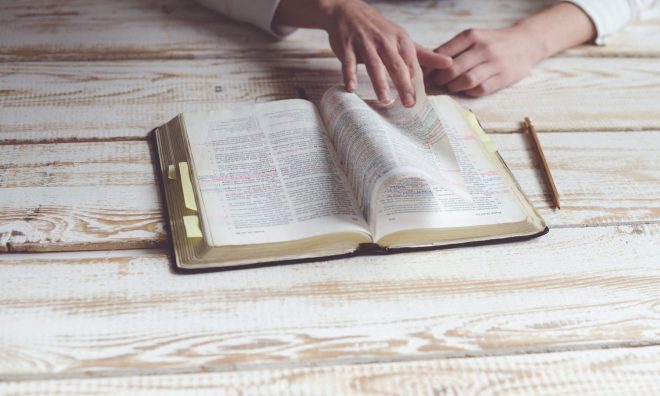
Image of open Bible

[Forty-Seventh in a series of posts on Bible Stories] Encore Post: In the small town of Nazareth, not far from the Sea of Galilee, the Angel Gabriel appeared a second time. He visited a young girl, likely about twelve to fourteen years old. Mary of Nazareth was preparing for her marriage. Her parents and Joseph’s parents had likely arranged their wedding years before. 

Like all the Jewish families in the area, her ancestors had settled there when God’s people won their independence from the Greek rulers of Syria about one hundred and fifty years before. They were from David’s town of Bethlehem, near Jerusalem, and were descended from King David. She was related to Elizabeth, the wife of Zechariah, to whom Gabriel had appeared just six months earlier. 

Just as startled as Zechariah was, Mary responded very differently. The elderly priest had doubted God’s word sent by his messenger. If anything, the message she received was even harder to believe. She was a virgin, and she knew what everyone knew — it takes a man and a woman to conceive a baby. However, she did not doubt the word of God’s angel. She didn’t even ask why. She asked how. When told the Holy Spirit would cast his shadow over her, as he did in the beginning, over the face of the deep, she consented. “I am God’s slave,” she said. “Let it be.” And it was. The eternal Son, God of God, Light of Light, became a baby in her womb.

She would treasure this visit in her heart. She would need that strength. Hard days lay ahead. Her Joseph would doubt. Wouldn’t you if your beloved said, “Good news! We will have a baby. No, obviously, he’s not yours. He’s God’s son. An angel told me!” He would plan to divorce her until an angel appeared to him. A Jewish man named Joseph knew better than to doubt dreams!

Yet it meant the first-century equivalent of a shotgun wedding, whispered gossip in the shadows, a quick visit to cousin Elizabeth until everything calmed down, and long, uncomfortable walks while very pregnant. Yet, God’s word was enough for her. She was blessed to bear and raise God’s Son. He would suffer and die while she watched. Yet she knew what his name meant: he would save his people from their sins. She would indeed be blessed — and honored by God’s people as the Mother of God himself.

Originally posted at What does this Mean? Blog: https://whatdoesthismean.blog

The posts in the blog What does this Mean? are now available at What does this Mean? | Rev. Robert E. Smith | Substack

Rev. Robert E. Smith
Pastor Emeritus
Fort Wayne, Indiana

©2018 Robert E. Smith. All rights reserved. Permission granted to copy, share and display freely for non-commercial purposes. Direct all other rights and permissions inquiries to cosmithb@gmail.com
Angel in the Temple

[Forty-Sixth in a series of posts on Bible Stories] Encore Post: Four hundred years had passed since the prophet Malachi spoke to God’s people. God had been silent all those years, but had not been idle. Now, an elderly priest named Zechariah was chosen to burn incense in the Holy Place of the temple, right outside the Holy of Holies. The angel Gabriel, who stands in the presence of God himself, appeared to Zechariah to announce the miraculous birth of a son. He was to be named John (God’s gift) and would fulfill Malachi’s last prophecy to send a herald to prepare the way of the Messiah. The last time this angel appeared, he brought dreams to Daniel.

You’d think Zechariah, who should have known better, would accept the news that he would have a son with joy. Yet that, like Abraham, he would have a child in his old age, when he was barren, was too much. Gabriel punished him by taking his voice until the day his son was to be circumcised.

When John was born, his relatives asked Zechariah what name to give his son. Zechariah wrote on a Roman wax tablet, “His name is John.” Then the silence of God was broken. Zechariah prophesied about the coming salvation and the role his son would play in it. We sing this prophecy in the liturgy of morning prayer. It is called the Benedictus. This old priest was, therefore, the second-to-last prophet of the Old Testament. His son, who we know as John the Baptist, would be the last and greatest.

John the Baptist had almost all the credentials to be the Messiah. His father was a priest, descended from Aaron. His mother was related to Mary, the mother of Jesus, and so descended from King David. Gabriel the Archangel announced his birth in the temple, while his father was offering prayers on behalf of the people to God. Both of his parents were very old, like Abraham and Sarah, and barren, like Hannah, the mother of Samuel. God named him in the same way he named Isaac and changed Jacob’s name to Israel. The angel announced he would come in the spirit and power of Elijah, one of the greatest prophets. Yet from the very start, he and his parents understood John was not the Messiah, but the one who would reveal him to the world and prepare the way for him.

Originally posted at What does this Mean? Blog: https://whatdoesthismean.blog
The posts in the blog What does this Mean? are now available at What does this Mean? | Rev. Robert E. Smith | Substack
Rev. Robert E. Smith
Pastor Emeritus
Fort Wayne, Indiana

©2018 Robert E. Smith. All rights reserved. Permission granted to copy, share and display freely for non-commercial purposes. Direct all other rights and permissions inquiries to cosmithb@gmail.com