Vocations of the Everyday Grind

[Seventieth in a series of posts on Martin Luther’s Small Catechism]

Encore Post: Changing the diaper, taking out the garbage, answering the phone call. Some events during our days are grinds. Getting the coffee going, putting breakfast plates together. They don’t sound like much, but if you are a baptized child of God, you are doing a good work for your closest neighbors, for you are united to Christ Jesus by the Sacrament of Holy Baptism.

That is a great comfort! And it ought to be because, more often than not, the everyday grind is tough enough. But God uses the “small things” in our daily lives and provides through them the occasion and opportunity to do good works. And these good works are not something we chase after; God has placed us in various vocations. I am a father, so I go to work to provide for my wife and children. That is my calling as a father.

In Luther’s day, daily vocations such as being a mother and father or a worker were thought of as inferior to the vocation of a priest because the mother or father was a secular vocation, whereas the priest had a religious calling. Nothing could be further from the truth! Luther, in his Treatise on Good Works, makes sure that the reader sees from Scripture again and again that whatever is done in faith is pleasing in God’s sight.

It is easy to get discouraged, though, because some people no longer know what their vocation is. The kids have moved out. Some people are in a nursing home, wondering when the Lord will call them home. I get the privilege as a pastor to visit them. They ask, “Why am I still here?” I usually respond, “God has given you the vocation to receive these wonderful gifts that Jesus has won for you and your salvation. And by you being here I get to serve you. And that brings me joy. So thank you for living in out this God-pleasing vocation.”

Our daily lives may seem small and perhaps arduous at times, but when we are connected to Christ by faith, whatever we do is pleasing in the sight of our heavenly Father.

Originally posted at What does this Mean? Blog: https://whatdoesthismean.blog

The posts in the blog What does this Mean? are now available at What does this Mean? | Rev. Robert E. Smith | Substack

Rev. Jacob Hercamp
Christ Lutheran Church
Noblesville, Indiana

©2019 Jacob Hercamp. All rights reserved. Permission granted to copy, share and display freely for non-commercial purposes. Direct all other rights and permissions inquiries to cosmithb@gmail.com

Vocations: Working out from Ground Zero

[Sixty-Ninth in a series of posts on Martin Luther’s Small Catechism]

Encore Post: In Holy Baptism, we are made God’s children. This is perhaps the greatest and most wonderful vocation into which we are placed. Let’s call baptism ground zero for vocations. Moving from ground zero, there are other vocations that are built into the kingdom of God. The vocation or calling of a pastor comes to mind.

In the Old Testament, God commanded the men of the tribe of Levi to serve in his tabernacle and later temple as priests, and the specific men who would do the bulk of the public preaching and teaching concerning the Lord and his wonderful works of salvation, like the Exodus events of the Passover Lamb and the Red Sea.

In the New Testament, it is no longer about tribal bloodlines. Jesus calls 12 men to be his disciples, and we are not really told much about their tribal relationships. The original 12 disciples who were with Jesus from the beginning of his ministry, from his baptism to his ascension into heaven, were then sent to proclaim their testimony concerning what they had seen. They were to proclaim the salvation won for us by Jesus Christ’s life, death, resurrection, and ascension. They did this publicly. Paul was a late comer but chosen by the risen Christ, Himself to be the voice to the Gentiles.

Jesus called these 12 apostles to preach and to proclaim the saving Gospel. They also wrote letters and the Gospels that are in our Bible, as John so aptly puts it, “that you may believe that Jesus is the Christ, the Son of God, and have life in His Name.” Today’s pastors are placed into a very related office of the apostles. Pastors are called to preach the Word, as it has been handed down by the apostles in Scripture. For by this preaching of Jesus’ salvific work, faith is created in the hearer. Baptisms are administered. The Lord’s Body and Blood is given to the body of believers. The baptized child of God is then ministered to by the next vocation in the line.

Originally posted at What does this Mean? Blog: https://whatdoesthismean.blog

The posts in the blog What does this Mean? are now available at What does this Mean? | Rev. Robert E. Smith | Substack

Rev. Jacob Hercamp
Christ Lutheran Church
Noblesville, Indiana

©2019 Jacob Hercamp. All rights reserved. Permission granted to copy, share and display freely for non-commercial purposes. Direct all other rights and permissions inquiries to cosmithb@msn.com

Vocation and the Table of Duties

[Sixty-Eighth in a series of posts on Martin Luther’s Small Catechism] 

Encore post:

You probably have heard the phrase “purpose-driven life” or something similar within the great “Christian” sphere of influence. With some of that teaching, it can go awry because the “purpose” becomes singular, and unfortunately, it can make you abdicate other duties or vocations in pursuit of that singular purpose. Instead of a single purpose, God, having justified us by grace through faith, has also created us in the image of Christ Jesus for good works, that we should walk in them.

What are good works? Good works are those things which flow from faith in Christ Jesus, as well as those things that are carried out within our vocation. Where do you find yourself? In the Small Catechism, after the 6 chief parts, there is a lesser-known but ultra-important section called the Table of Duties.

The Table of Duties is a list of Bible passages that address the common yet holy vocations of Christians in their daily lives. The table begins with vocations within the church, then out to the public square, and finally back into the household. The compiled Bible passages are not an exhaustive list of the duties that comprise each calling or vocation, but they provide a good overview of the most common vocations: pastors, laypeople, children, parents, workers, and employers.

Some vocations can be chosen. Others are handed down to you without your consent. I am a son. I am also a brother. I was not asked how I felt about that. I learned quickly what it meant to live in the vocation of son and brother. But other vocations came through my own choosing. I am a husband and a father. Now that I have become a husband and a father, however, I am called upon and admonished to do the duties required of me from Scripture.

You might consider each kind of job a vocation. You might even say you are called to a particular job. But we must be careful how far we take that discussion because what would happen if we left that job? Would it be sinful to switch your career? We should not go that far, but understand that we are accountable to the more general descriptions of being a worker, etc.

The term vocation is freighted with all kinds of weight. But we Christians should turn our attention to the table of duties and ask ourselves, “Where do I find myself?”

Originally posted at What does this Mean? Blog: https://whatdoesthismean.blog

The posts in the blog What does this Mean? are now available at What does this Mean? | Rev. Robert E. Smith | Substack

Rev. Jacob Hercamp
Christ Lutheran Church
Noblesville, Indiana

©2019 Jacob Hercamp. All rights reserved. Permission granted to copy, share and display freely for non-commercial purposes. Direct all other rights and permissions inquiries to cosmithb@gmail.com

Stay with Us, Lord, for it is Evening

Encore Post:

Today, our Easter celebration of the resurrection is filled with joy. White paraments, flowers, and banners decorate our churches. Well-practiced organs, choirs, and musical instruments of all kinds add to our song. After all, we know the story and how it ends. Jesus is risen!

The first Easter was quite different. Women close to Jesus reported visions of angels and the Lord himself. The disciples didn’t know what to think. The five accounts of that day show the confusion. (Matthew 28:1-15, Mark 16:1-8, Luke 24:1-49, John 20:1-23, 1 Corinthians 15:3-5) Different people were running all over the place, and each story is its own. One thing was for sure. The tomb was empty.

On the first Sunday afternoon, two disciples were on the road home, feeling very unsettled. Could it be true? Was the Lord really risen from the dead? Jesus appeared to them, but did not reveal himself to them. As they walked to Emmaus, Jesus showed them how the Old Testament pointed to him and that he had to suffer, die, and rise again from the dead. They invited him to stay with them for the evening. As they ate dinner, Jesus blessed the bread, broke it, and gave it to them. They recognized him. He immediately vanished.

These two disciples immediately went back to Jerusalem to report to the disciples what had happened. There, they learned Jesus had appeared to Peter. As they were talking about this, Jesus removed all doubt. He appeared to them, ate some food to show them he was not a ghost, but had risen from the dead, body and soul. He then blessed the Apostles and gave them the power to forgive and retain sins.

When life gets confusing, and we do not know what to do, Jesus comes to us in his word. Even though we do not see him, he is always with us. When we pray, “Stay with us, Lord,” he does. We are never alone, even until the end of time itself.

Originally posted at What does this Mean? Blog: https://whatdoesthismean.blog

The posts in the blog What does this Mean? are now available at What does this Mean? | Rev. Robert E. Smith | Substack

Rev. Robert E. Smith
Pastor Emeritus
Fort Wayne, Indiana

©2018 Robert E. Smith. All rights reserved. Permission granted to copy, share and display freely for non-commercial purposes. Direct all other rights and permissions inquiries to cosmithb@msn.com

The Day of Resurrection

Encore Post: He is risen! He is risen indeed! Hallelujah!

In the silence of a cold, dark tomb, the world changed forever. Just as he promised, Jesus rose from his rest in the grave, breaking the seal of the tomb forever. And no one noticed.

The Romans were really good at torturing people to death. Crucifixion was a slow death, designed to kill with the maximum amount of pain and humiliation possible. If the Romans killed you, you were dead. Jesus, in fact, was already dead when the soldiers moved to hurry the process to get the bodies into a grave before sunset and the beginning of the Sabbath.

Once they laid Jesus in the tomb, no one expected him to go anywhere. Pilate ordered the tomb sealed by the authority of Rome, setting its seal on the stone that shut it off from the world. Had he not risen from death, the women would have completed his embalming, and they would have mourned him for seven days. After a year, they would have gathered his bones into a stone box. In fact, this is what Caiaphas’ family did. Archaeologists have found the high priest’s box. Had he not risen, likely no one today would even know the name of Jesus.

But Jesus did rise from the dead. The seal of our graves is broken. When we die now, our spirits live with him until the last day. When Jesus returns. On that day, he will call our bodies from the grave, and a new creation will occur. We will finally be whole — our bodies — like his resurrected body, will be fit for eternal life. Death no longer has a sting. The grave will have no victory. (1 Corinthians 15:55-57)

That is why Easter strikes such a chord with Christians. It is why we greet each other with joy… Christ is risen…

Originally posted at What does this Mean? Blog: https://whatdoesthismean.blog

The posts in the blog What does this Mean? are now available at What does this Mean? | Rev. Robert E. Smith | Substack

Rev. Robert E. Smith
Pastor Emeritus
Fort Wayne, Indiana

©2018 Robert E. Smith. All rights reserved. Permission granted to copy, share and display freely for non-commercial purposes. Direct all other rights and permissions inquiries to cosmithb@msn.com
Christ’s Sabbath Rest in the Tomb

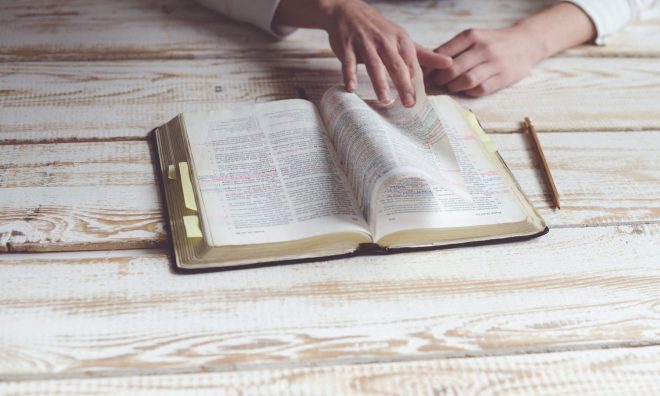
Encore Post: Jesus died late in the afternoon on Good Friday, just before the Sabbath began at sunset. Two of his secret disciples asked Pilate for his body — Nicodemus and Joseph of Arimathea. They gave him a hasty but rich man’s burial. Several of the women closest to Jesus followed them to the tomb. Joseph rolled a large stone in front of the entrance, and they left him there. Later, at the priests’ request, Pilate set a guard and sealed it to prevent the body’s theft. As the second day Jesus was dead began, he was finally at rest.

As God rested on the seventh day of creation, so now Jesus rested on the first Sabbath of the new creation. By his sacrifice on the cross, he destroyed sin and the power of the devil. Soon, when the Sabbath ended, he would break the power of death as well.

As Christians prepare for a joyful Easter celebration, we often miss this moment of quiet and peace. Soon, when sunset comes, the third day will begin. Sometime between that sunset and dawn, Jesus rose from the dead, descended to Hell to complete his victory over Satan, and became the first to rise into eternal life. The Church will begin its Vigil of Easter at sunset and sing the songs of Resurrection again.

Originally posted at What does this Mean? Blog: https://whatdoesthismean.blog

The posts in the blog What does this Mean? are now available at What does this Mean? | Rev. Robert E. Smith | Substack

Rev. Robert E. Smith
Pastor Emeritus
Fort Wayne, Indiana

©2018-2024 Robert E. Smith. All rights reserved. Permission granted to copy, share and display freely for non-commercial purposes. Direct all other rights and permissions inquiries to cosmithb@gmail.com

My God, My God Why Have You Forsaken Me?

Encore Post: Good Friday is the most somber day in the Church Year. On this day, the price of our sin is paid out in full — by God Himself. The ancient plan for our salvation had been unfolding for thousands of years. The descendant of Eve, of Noah, of Abraham, and of David was born to the Virgin Mary. The Son of God, the Author of Life himself, became one of us. At the Jordan River, he made holy the waters of Baptism and took on himself the sins of the world. On Mt. Zion, ancient Mt. Moriah, where the Angel of the Lord stayed the hand of Abraham, God’s Son, His only Son, whom he loves, was condemned to die as the Lamb of God, who takes away the sin of the world. Sentenced by Pilate, he began his final suffering and was nailed to the cross. Even as he began to die, the forgiving began — first of those who killed him and then of a thief on a nearby cross.

The greatest mystery of all came at the height of his suffering. The Eternal Son of God cried out, “My God, my God, why have you forsaken me?” (Matthew 27:46) in the language of his boyhood. We should not be surprised that we cannot understand this profound moment. Yet we know a few things for sure. We know this very moment was revealed in detail in the Scripture itself. Jesus’ words are a quotation from his father, David, in Psalm 22, written a thousand years earlier. We know Jesus felt abandoned by God. His prayers unanswered and his loneliness show that he shares fully in our humanity. He is like us in every way, which is why his sacrifice on our behalf is possible. We know that it is our sin he paid for on the cross, and that price is unimaginably high. We are moved as we extinguish one light after another, remembering the depth of his suffering.

Yet this is not the last word we hear from the suffering of our Lord. As he died, he said, “It is finished.” (John 19:30) Sin was atoned for, the power of the Devil defeated, and the seal of the grave soon to be broken. Jesus knew the Father had not abandoned him. He once again quoted his father, David, in Psalm 31, “Into your hands I commit my spirit” (Luke 23:46), and entered his three-day rest in the tomb.

Originally posted at What does this Mean? Blog: https://whatdoesthismean.blog

The posts in the blog What does this Mean? are now available at What does this Mean? | Rev. Robert E. Smith | Substack

Rev. Robert E. Smith
Pastor Emeritus
Fort Wayne, Indiana

©2018 Robert E. Smith. All rights reserved. Permission granted to copy, share and display freely for non-commercial purposes. Direct all other rights and permissions inquiries to cosmithb@msn.com

Lamb of God, Pure and Holy

Encore Post: The night God delivered his people from slavery in Egypt, the Hebrews selected perfect lambs from their flocks. They had no injuries, blemishes, or birth defects. These lambs were slaughtered, their blood smeared on their doors, their meat roasted for a feast. That night, the Angel of Death passed over their houses as the firstborn of all Egypt perished.

On the evening God delivered us all from sin, death, and the power of the devil, the disciples arranged a Passover meal for them and for Jesus. John the Baptist had called him the Lamb of God, who takes away the sins of the world. He took bread and said, “This is my body given for you,” and wine and said, “This cup is the New Testament in my blood.” St. Paul calls him “our Passover, who is sacrificed for us.”

The Lord’s Supper, then, is our New Passover. In it, God gives us the forgiveness of sins, life, and salvation. The Angel of Death passes over us. In baptism, we are united with him in his death on the cross. We enter the Red Sea of death with him and rise to new life when he breaks the seal of our graves.

Once again in Holy Week, we follow the Lamb of God as he goes to his death willingly. We pray as he takes each step,

Lamb of God, pure and holy,
Who on the cross did suffer…
Have mercy on us, O Jesus.

Originally posted at What does this Mean? Blog: https://whatdoesthismean.blog

The posts in the blog What does this Mean? are now available at What does this Mean? | Rev. Robert E. Smith | Substack

Rev. Robert E. Smith
Pastor Emeritus
Fort Wayne, Indiana

©2018-2024 Robert E. Smith. All rights reserved. Permission granted to copy, share and display freely for non-commercial purposes. Direct all other rights and permissions inquiries to cosmithb@msn.com

Three Days and Three Nights

Encore Post: Maundy Thursday, Good Friday, and Holy Saturday have been remembered by the Church since ancient times as the days on which our salvation was won through the suffering, death, and resurrection of our Lord. She accomplishes this with a single service that lasts three days. The Maundy Thursday divine service begins with an invocation but does not conclude with a benediction. Good Friday services have neither an invocation nor a benediction. The Vigil of Easter on Saturday evening does not begin with an invocation, but ends with a benediction.

The name Maundy Thursday comes from the Latin word mandatum — the first word in the Latin translation of Jesus’ command: “a new commandment I give to you: love one another.” (John 13:34) Jesus gave this command at the Last Supper, the night we also remember because he also instituted the Lord’s Supper during that Passover meal. The Maundy Thursday service ends with the stripping of the altar, the lectern, and the pulpit, and the removal of the pastor’s vestments. Often, the account of the Garden of Gethsemane and Jesus’ arrest is read during this time. We depart in silence, noting that the disciples abandoned Jesus.

The day that begins at sunset on Maundy Thursday witnessed the whole of Jesus’ passion and death. We call it Good Friday because it is the day we were redeemed. It is also the first day of Christ’s rest in the tomb. This second day, Jesus was in the grave, which began at sunset on Friday. On Holy Saturday after sunset, the third day starts. The Church holds a vigil, a service that marks the beginning of Easter. Often, Christians are baptized during the vigil.

On these three days, Christ fulfilled his promise that he would take our sins to the cross, die to pay their due, make holy our graves by resting in death, defeat Satan and death, and rise again to shatter the grave forever. Three days to remember and to thank God for his mercy.

Originally posted at What does this Mean? Blog: https://whatdoesthismean.blog

The posts in the blog What does this Mean? are now available at What does this Mean? | Rev. Robert E. Smith | Substack

Rev. Robert E. Smith
Pastor Emeritus
Fort Wayne, Indiana

©2018 Robert E. Smith. All rights reserved. Permission granted to copy, share and display freely for non-commercial purposes. Direct all other rights and permissions inquiries to cosmithb@msn.com

One Loaf, One Body

Encore Post:

[Sixty-third in a series of posts on Martin Luther’s Small Catechism]

For many Christians, Holy Communion is a very personal thing. Even those who think of it as a symbol and not a sacrament cherish it. It has a way of strengthening their faith in Jesus. So it comes as a surprise to many that the Lord’s Supper has a way of doing the same thing between Christians. St. Paul says, “because there is one loaf, we, who are many, are one body.” (1 Corinthians 10:17) When we eat the bread and drink the cup, we proclaim together his death until he comes. (1 Corinthians 11:26) So, when we commune together, we are confessing that we share the same faith as well as receive the benefits of the sacrament.

This is why Confessional Lutherans practice Closed Communion. All those who share the sacrament with us proclaim that what we teach is what they believe. Since non-Lutherans may not believe this, we do not want them to be saying something they do not believe. It is also why we do not commune at churches whose teachings we do not believe. In addition, if a communicant does not believe they receive Christ’s body and blood with the bread and wine of the sacrament, they may not examine themselves before receiving it. In love, we ask them not to put themselves in danger of sinning against Christ when they receive it. Because we do not want this divide to remain, we take every opportunity to study God’s word with them on subjects we disagree about.

Originally posted at What does this Mean? Blog: https://whatdoesthismean.blog

The posts in the blog What does this Mean? are now available at What does this Mean? | Rev. Robert E. Smith | Substack

Rev. Robert E. Smith
Pastor Emeritus
Fort Wayne, Indiana

©2018 Robert E. Smith. All rights reserved. Permission granted to copy, share and display freely for non-commercial purposes. Direct all other rights and permissions inquiries to cosmithb@gmail.com