Malachi, The Last of the Old Testament Prophets — Almost

[Forty-Fifth in a series of posts on Bible Stories] Encore Post: The people of Judah had returned from exile in Babylon. Through the Persian ruler Cyrus, the people had resettled in the promised land. They rebuilt the temple, although not nearly to the glory of Solomon’s Temple. They rebuilt the walls of Jerusalem — and their lives. And then the people felt forgotten and isolated, a small province of a vast and worldwide foreign empire. God sent the prophet Malachi. His name means Messenger, Angel.

Malachi assured Judah of God’s love, calling on them to repent, especially the priests. He then lifted their eyes to look towards the future. He would send another Malachi — a messenger — Elijah, to prepare the way of the Lord. He would turn their hearts to each other, so that the Lord would not need to destroy them completely. With that, the voices of the prophets fell silent. It would be at least four hundred years before God would speak through a prophet again.

The people would not forget this time. They would bring together all the prophecies and types of the Messiah and his Malachi — Messenger. They came to look for an earthly kingdom and the day of the Lord. And so they missed the return of the Prophets — a Son of Levi and David — a second Zechariah and his son, the last and greatest prophet. But that is another story!

While God was silent, he was not absent or idle. In the time between the testaments, God began to prepare the ground for his prophets — and for his Son. The next few posts will delve into the methods he employed.

Originally posted at What does this Mean? Blog: https://whatdoesthismean.blog
The posts in the blog What does this Mean? are now available at What does this Mean? | Rev. Robert E. Smith | Substack
Rev. Robert E. Smith
Pastor Emeritus
Fort Wayne, Indiana

©2018 Robert E. Smith. All rights reserved. Permission granted to copy, share and display freely for non-commercial purposes. Direct all other rights and permissions inquiries to cosmithb@gmail.com

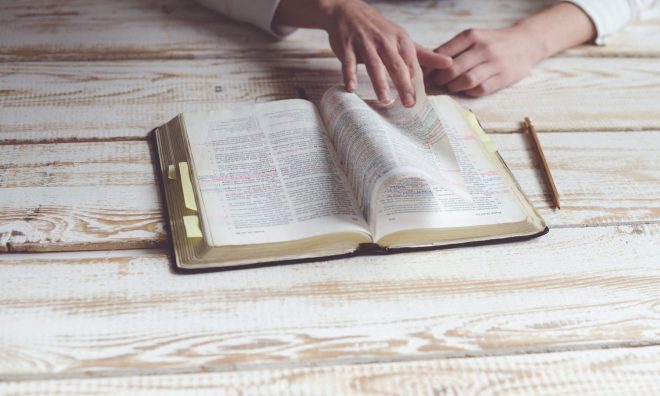
Prophets Told of Jesus Coming

[Forty-Fourth in a series of posts on Bible Stories] Encore Post: A prophet is someone who speaks for God. In the Old Testament, God called many individuals to serve as His voice among the people of Israel. While we think of a prophet as someone who predicts the future, a prophet mostly preached to God’s people, calling them to repentance and bringing a word of comfort to them. Occasionally, a few prophets would see into the future and tell God’s people what God was going to do.

Just as God raised up prophets to speak His Word to Israel, so He now calls pastors to proclaim that same Word to His Church. The pastoral office doesn’t deal in visions or predictions, but in the faithful preaching of Christ crucified, the administering of His sacraments, and the shepherding of souls through Law and Gospel. Like the prophets, the pastor is sent—not to offer his own insights, but to speak what God has already spoken in his word. His task is to call sinners to repentance, to comfort the weary with the promises of Christ, and to point always to the One who is both the message and the Messenger. In this way, the pulpit becomes a kind of prophetic post—not by new revelation, but by the Spirit’s ongoing work through the Word of God.

According to the prophets, the Messiah would be a descendant of Eve, whom Satan would kill, but who would defeat Satan. (Genesis 3:15) He would be born of a virgin. (Isaiah 7:14) In Bethlehem (Micah 5:2), the Messiah would be a descendant of David and would be called God (Isaiah 9:6). He would be crucified as a sacrifice for the sins of the world. (Psalm 22, Isaiah 53:4-12)

As important as the prophets were, Jesus is greater than all of them. He was a prophet like Moses. (Deuteronomy 18:15-19) The writer of Hebrews tells us that “in many and various ways, God spoke in ancient times through the prophets, but now in these last days, He has spoken to us by His Son.” Prophets spoke the word of God, but Jesus was the Word of God. When we hear Jesus, we hear the Father; when we see Jesus, we see the Father. When we want to know what God is like, we look at Jesus.

Originally posted at What does this Mean? Blog: https://whatdoesthismean.blog
 
The posts in the blog What does this Mean? are now available at What does this Mean? | Rev. Robert E. Smith | Substack
Rev. Robert E. Smith
Pastor Emeritus
Fort Wayne, Indiana


©2018-2025 Robert E. Smith. All rights reserved. Permission granted to copy, share and display freely for non-commercial purposes. Direct all other rights and permissions inquiries to cosmithb@gmail.com

Esther and Mordecai

[Forty-Second in a series of posts on Bible Stories] Encore post: The Book of Esther is unique — it does not use the name of God, speak of prayer, worship, or other spiritual topics. Many have questioned its place in the Bible because of that. Both the church and the synagogue have seen God’s hand in the events of the book and so have accepted it as scripture. The book explains how the Feast of Purim was established.

Like Jews — and many others — in ancient times, Mordecai and Esther both have two names, “gentile” names, assigned by their captors and Hebrew names given by their parents. Mordecai means “servant of Marduk,” after the Babylonian god, and Esther is the Persian version of the name of the goddess Ishtar, the goddess of fertility and love. The Bible does not mention Mordecai’s Hebrew name. Esther’s Hebrew name, Hadassah, means “myrtle.”

Considering the fate of the queen before her, Esther showed great courage. When her political skills are put to the test, she saves the Jewish people from their enemies. More than that, her influence resulted in the king’s favor for the Jewish people. Not long after the events in the book, Ezra left for Jerusalem.

In the years that followed, Mordecai served as vice-king of the greatest empire up to that time. Many Jews were given positions of power and influence. The king was so pleased with their service that he allowed the rebuilding of the walls of Jerusalem and granted them the right to govern themselves as long as he reigned.

Originally posted at What does this Mean? Blog: https://whatdoesthismean.blog
The posts in the blog What does this Mean? are now available at What does this Mean? | Rev. Robert E. Smith | Substack
Rev. Robert E. Smith
Pastor Emeritus
Fort Wayne, Indiana

©2018 Robert E. Smith. All rights reserved. Permission granted to copy, share, and display freely for non-commercial purposes. Direct all other rights and permissions inquiries to cosmithb@msn.com

Daniel and the Lions

[Forty-First in a series of posts on Bible Stories] Encore post: Daniel lived a long and remarkable life. As a young man, he was carried off into exile by the Babylonians. Because he showed remarkable leadership skills, King Nebuchadnezzar brought him into the court. He lived a long life in the service of Babylon, living until the Persians conquered the empire. He continued to serve the Persians.

Daniel was an honorable official and fell victim to politics in the top ranks of the Persian Empire. His enemies got a law passed that Daniel could not keep. (Daniel 6) The law required that no one pray to any god other than the king for thirty days. Even though he knew the law, Daniel continued his custom of praying three times a day, facing Jerusalem, giving thanks to God. His enemies turned him in to King Darius, who, even though he was Daniel’s friend and didn’t want to condemn him, ordered him thrown to the lions.

Being above reproach, Daniel did not respond as many politicians in his day and those in government even to this day. He did not retaliate, but allowed his innocence to speak for him. Having been thrown to the lions, God rewarded Daniel’s trust and faithfulness by sending an angel to protect his servant. When the king saw Daniel was still alive, he restored Daniel and had his enemies thrown to the lions.

Daniel has become a model for civil service for Christians. His example of faith was praised by the writer of the book of Hebrews, along with his friends Shadrach, Meshach and Abednego. He shows us the way to love God and serve our nation as well.

Originally posted at What does this Mean? Blog: https://whatdoesthismean.blog

The posts in the blog What does this Mean? are now available at What does this Mean? | Rev. Robert E. Smith | Substack

Rev. Robert E. Smith
Pastor Emeritus
Fort Wayne, Indiana

©2018 Robert E. Smith. All rights reserved. Permission granted to copy, share and display freely for non-commercial purposes. Direct all other rights and permissions inquiries to cosmithb@msn.com

Three Men in the Furnace — or is it Four?

[Thirty-ninth in a series of posts on Bible Stories] Encore Post: Ancient peoples looked upon their leaders as lesser gods, worthy of worship. They built statues to honor themselves and required all people to worship them. This practice continued even in Roman times, to the pagan Caesars. It was seen as a patriotic act, similar to reciting the Pledge of Allegiance and saluting the flag. From time to time, kings would enforce public worship of their statues or the statues of their gods to test the loyalty of their subjects.

For Shadrach, Meshach, and Abednego, loyalty to God was more important than their own lives. They trusted God could deliver them and placed full trust in Him. Yet they were prepared for God to take them to His side instead. God sent his Son as the Angel of the Lord to protect his servants in the fire. The writer of the book of Hebrews included these men in the great chapter on faith. (Hebrews 11:32-34) Christian martyrs throughout the centuries looked up to these men for inspiration when called to choose between God and country.

Faith is trusting God to keep his promises. It holds on to the fact that God kept the most important of his promises to his people in the Old Testament. In the person of the Son of God, he became a man in the womb of the Virgin Mary, lived a perfect life for us, suffered and died at the hands of a pagan government, rose again from the grave, and ascended to heaven. Because he has done these things, we are certain that he will keep the rest of his promises — to bring us to be with him forever when we die and raise us from the grave on the last day. It is that faith that sustained Shadrach, Meshach, and Abednego, their friend Daniel, and all the martyrs for the faith who obeyed God rather than man. With them numbered may we be, here and in eternity.

Originally posted at What does this Mean? Blog: https://whatdoesthismean.blog
 
The posts in the blog What does this Mean? are now available at What does this Mean? | Rev. Robert E. Smith | Substack
Rev. Robert E. Smith
Pastor Emeritus
Fort Wayne, Indiana
 

©2024 Robert E. Smith. All rights reserved. Permission granted to copy, share and display freely for non-commercial purposes. Direct all other rights and permissions inquiries to cosmithb@msn.com

King Josiah

  [Thirty-Seventh in a series of posts on Bible Stories] Encore post: King Josiah was unique. He was king at age eight. He loved the Lord and vowed to keep God’s covenant with Judah when he began his reign. Few of his royal ancestors were faithful to God and His law; most of them worshipped the gods of the Canaanites. His grandfather Manasseh was among the worst, sacrificing his own sons on their altars. His father continued the pattern, letting the temple fall into disrepair, placing idols within its walls, and encouraging the people to practice the religion of their neighbors.

During these evil years, it appears that the priests removed the scrolls containing the Book of Deuteronomy from the open areas of the temple and hid them in the storerooms nearby. King Josiah ordered the temple renovated and placed the High Priest in charge. As they cleaned and repaired the building, the priests rediscovered it.

When King Josiah heard the words of this book read, he reacted with great sorrow. He realized that God’s people had wandered far from the Lord and spent the rest of his life destroying the false gods of Canaan and calling God’s people to serve their Lord. Josiah remains an example of how a devout leader can live to serve God and His people.

Originally posted at What does this Mean? Blog: https://whatdoesthismean.blog

The posts in the blog What does this Mean? are now available at What does this Mean? | Rev. Robert E. Smith | Substack

Rev. Robert E. Smith
Pastor Emeritus
Fort Wayne, Indiana

©2018-2024 Robert E. Smith. All rights reserved. Permission granted to copy, share and display freely for non-commercial purposes. Direct all other rights and permissions inquiries to cosmithb@msn.com.

King Hezekiah Celebrates Passover

[Thirty-Fifth in a series of posts on Bible Stories] Encore Post: Every year, Jewish people celebrate Passover. This festival remembers the time when God freed the people of Israel from slavery in Egypt and led them through the Red Sea to safety. It recalls the night when God commanded their ancestors to sacrifice a lamb, place its blood on their doorposts, roast and eat the lamb with unleavened bread, and prepare to leave Egypt. That evening, God sent the Angel of Death through the land to kill the firstborn son of every Egyptian, from the Pharaoh to the lowest slave. When the angel saw the blood on the doorpost, he passed over the home.

When the father of King Hezekiah died and he became king of Judah, he resolved to restore the worship of God according to the traditions of his ancestors, David and Solomon. (2 Chronicles 29-30) His father had neglected the worship of God and allowed the people to worship the gods of other nations. King Hezekiah ordered the priests and Levites to perform the rituals commanded by Moses to make themselves holy, to cleanse the temple, and to make it holy according to the rules set down by Moses, Solomon, and David. He ordered a large-scale sacrifice to atone for the people’s sins and to restore regular prayers and sacrifices. Because the priests were caught by surprise by this, not enough of them were ready.

Eager to celebrate Passover again, Hezekiah and the people celebrated it late, in the second month, rather than the first (April into May). He invited everyone in Israel, including the survivors of the Assyrian invasion of the northern kingdom of Israel that had been conquered. The people celebrated so joyfully that they extended the festivities into a second week.

For Christians, Jesus is the Passover Lamb, whose blood saves us from eternal death. In the Lord’s Supper, He gives us His body in the bread and His blood in the wine. In it, we receive the forgiveness of sins, life, and salvation. So we celebrate it with joy, because God set us free.

Originally posted at What does this Mean? Blog: https://whatdoesthismean.blog
The posts in the blog What does this Mean? are now available at What does this Mean? | Rev. Robert E. Smith | Substack
Rev. Robert E. Smith
Pastor Emeritus
Fort Wayne, Indiana
©2022 Robert E. Smith. All rights reserved. Permission granted to copy, share and display freely for non-commercial purposes. Direct all other rights and permissions inquiries to cosmithb@msn.com

Jonah and the Unforgivable

[Thirty-Third in a series of posts on Bible Stories] Encore Post: Nineveh was the ancient capital of the Assyrian Empire, on the Tigris River in what is now modern Iraq. Our story takes place during the years when its power was growing, and several events caused the people to focus on serving their gods. About a century after the events of the Book of Jonah, the Assyrians invaded Israel and carried off all the people of the Northern Kingdom into exile.

Jonah is not a typical prophet. He came from a small town near Nazareth and hated the people of Nineveh for their legendary cruelty. Rather than take part in God’s plan to rescue the residents of the city from their sinful ways, he would rather go to the ends of the earth — literally. Tarshish was in Spain, which was the western edge of the known world at that time. As pagan sailors work to save his life, he seems unconcerned. When the fish swallows him, he comes to his senses and turns to God. Yet even then, he only preaches to Nineveh because God commands him to do so. He is even angrier with God when the people repent and God spares them.

Before we criticize Jonah too much, consider how you’d react if God sent you to preach to people that you have no use for. Imagine being called to preach to members of murderous gangs, to Muslim terrorists, or even to those who rape or beat up children or women. It’s hard to have any sympathy for them, isn’t it?

Yet that is what we are called to do. American Lutheran pastor Henry Gerecke had volunteered as a chaplain in World War II. He served as a chaplain in an army unit and visited the Dachau death camp. When the Army asked him to be the chaplain for the Nazis on death row during the Nuremberg war crime trials, he volunteered. How do you minister to monsters? He approached the eleven Nazi leaders who conducted the Holocaust through their childhood faith. He did not gloss over their crimes. When they asked to be communed, he refused unless they truly repented and confessed faith in Jesus. It is not a surprise that seven did not. Yet four did. He prayed a childhood prayer with one of them as the Nazi went to the gallows.

We must never forget that we, too, are sinners and unworthy of God’s mercy. Yet God, in his love, sent Jesus to see and to save the lost — both respectable people and the monsters, too. He calls on us to rejoice, for he has found his lost sheep and brought them all home.

Originally posted at What does this Mean? Blog: https://whatdoesthismean.blog
The posts in the blog What does this Mean? are now available at What does this Mean? | Rev. Robert E. Smith | Substack
Rev. Robert E. Smith
Pastor Emertitus
Fort Wayne, Indiana
©2022 Robert E. Smith. All rights reserved. Permission granted to copy, share and display freely for non-commercial purposes. Direct all other rights and permissions inquiries to cosmithb@msn.com

Elijah’s Mantle on Elisha Cast

[Thirty-First in a series of posts on Bible Stories] Encore Post: Elijah knew his ministry was nearing the end. At Mount Sinai, he complained to God that all his ministry, including fire called from heaven, was useless. He believed he was alone. God showed his prophet his glory in wind, earthquake, and fire. As Moses did in the same place, Elijah hid his eyes from the glory of God — this time with his cloak, the symbol of his call as a prophet. Yet even after seeing the glory of God, Elijah was unmoved. So, in a quiet voice, God told his faithful prophet he was far from alone. To Elijah, he gave a final commission: to appoint his successors.

God sent Elijah to call Elisha to be his successor. Their names sound very close in English, but are very different in Hebrew. Elijah means, “Yahweh is God.” Elisha means, “God saves.” Elisha’s name is very close to Joshua’s name. Joshua means, “Yahweh saves.” Elijah threw his cloak over Elisha, who did not miss the meaning of that gesture.

When it was time for Elijah to go, he and Elisha went to Gilgal. There, the people of Israel had first camped when they came into the promised land, were circumcised as God’s people, celebrated the Passover, saw the end of the coming of Manna, and the departure of the pillar of fire by night and cloud by day. There, the Angel of the Lord commissioned Joshua. Then they went to Bethel, where Jacob had dreamed of the angels coming and going from heaven. Finally, they went to Jericho, where Joshua struck the first blow against the gods of Canaan.

When the two prophets arrived at the Jordan River, Elijah rolled up the cloak into a staff like Moses’. He struck the river, and it parted — just as it did in the same place for Joshua. Like Moses, Elijah would depart this world from just outside the promised land. As the chariot of fire carried Elijah into heaven in a whirlwind, Elisha caught his cloak. The new prophet struck the Jordan with it, and it parted. God had made Elisha the heir of Elijah’s ministry.

Nearly two thousand years later, Moses and Elijah met with Jesus as those he would send watched. The new Joshua (Jesus’ name is the Greek form of Joshua’s name) would suffer, die and rise again to defeat sin, death and the power of the devil. Rising from the dead, he breathed the Holy Spirit on his appointed prophets. From generation to generation, one generation’s prophets have laid their hands upon those who would take up their stoles after them. God of the prophets, bless the prophets’ sons, Elijah’s mantle on Elisha cast. Make each one nobler, stronger than the last.

Originally posted at What does this Mean? Blog: https://whatdoesthismean.blog
 
The posts in the blog What does this Mean? are now available at What does this Mean? | Rev. Robert E. Smith | Substack
Rev. Robert E. Smith
Pastor Emeritus
Fort Wayne, Indiana
 
©2022 Robert E. Smith. All rights reserved. Permission granted to copy, share and display freely for non-commercial purposes. Direct all other rights and permissions inquiries to cosmithb@gmail.com .

Solomon Asks for Wisdom

[Twenty-ninth in a series of posts on Bible Stories] Encore Post: When God invited Solomon to ask for a blessing, Solomon asked for wisdom. Solomon’s request pleased God for several reasons. First, he was humble, realizing his limitations. He was still very young and had little experience in governing. Second, he sought to serve God first. He asked for wisdom — the ability to use knowledge well to meet needs — and discernment, the ability to tell right from wrong. He sought first God’s kingdom and righteousness. God granted him what he asked for — and riches, fame, and a long life as well.

King Solomon was the son of King David and Bathsheba. His life shows how completely God forgives, since David committed great sins with and because of Bathsheba. They deserved to die, but God forgave them, let them live, and gave them a second son. Solomon would be an ancestor of the Messiah.

Under Solomon, Israel became a prosperous and powerful nation. Solomon was a superb organizer. He reformed the kingdom’s bureaucracy, making it more efficient and effectively channeling its prosperity. He built God’s Holy Temple and numerous other buildings. He became a collector of proverbs, many of which appear in the Book of Proverbs. According to tradition, the Books of Ecclesiastes and Song of Songs were written by the King, although there is much debate among scholars about this.

As great as he was, Solomon was a sinner also. He married hundreds of wives, mainly to secure treaties. He allowed them to worship the gods of their fathers and even constructed temples for them. For this reason, God caused the kingdom to be divided during his son’s reign. Yet, for the sake of the one greater than Solomon, his sins are forgiven, along with ours.

Originally posted at What does this Mean? Blog: https://whatdoesthismean.blog
The posts in the blog What does this Mean? are now available at What does this Mean? | Rev. Robert E. Smith | Substack
Rev. Robert E. Smith
Pastor Emeritus
Fort Wayne, Indiana

©2018 Robert E. Smith. All rights reserved. Permission granted to copy, share and display freely for non-commercial purposes. Direct all other rights and permissions inquiries to cosmithb@msn.com