Luke’s Musical

[Fifty-Second in a series of posts on Bible Stories]

Encore Post:

St. Luke wrote his Gospel and the Book of Acts in polished, carefully constructed Greek. The introductions to both books are written in well-balanced, formal language, reminiscent of the best of ancient classical history. But when he begins the story of Jesus, he writes in the Greek of the Septuagint — the translation of the Old Testament read in the synagogues where Jesus and his disciples grew up. It would be like reading a novel that starts in New York, written with a Brooklyn accent, and, when the scene changes to Dallas, it speaks with a Texas twang and vocabulary.

As Luke weaves the story, he recalls several canticles — New Testament psalms, really — sung by various persons in it. The result is much like a modern musical. The Church picked up on this. We sing them in worship and have done so for over 1,600 years.

Called by the first few words of these songs in Latin, they are:

  1. Mary’s song, the Magnificat. We sing it during Vespers.
  2. Zechariah’s song, the Benedictus, is sung in morning services.
  3. The Christmas Angel’s song, the Gloria, is sung in the Divine Service when the Lord’s Supper is served.
  4. Simeon’s Song, the Nunc Dimittis, is also sung during Divine Service.

These songs of joy, celebrating the births of the Messiah and the prophet who announced him, are now our songs, too, not just at Christmas, but the whole year.

Originally posted at What does this Mean? Blog: https://whatdoesthismean.blog

The posts in the blog What does this Mean? are now available at What does this Mean? | Rev. Robert E. Smith | Substack

Rev. Robert E. Smith
Pastor Emeritus
Fort Wayne, Indiana

©2018 Robert E. Smith. All rights reserved. Permission granted to copy, share and display freely for non-commercial purposes. Direct all other rights and permissions inquiries to cosmithb@msn.com

The Presentation of our Lord

[Fiftieth in a series of posts on Bible Stories]

Encore Post:

Childbirth was an exciting and frightening event at the time of Jesus. Many children and their mothers died soon after birth. When both mother and child survived the ordeal, God’s law required male children to be circumcised on the eighth day following their birth. After forty days, when the greatest danger to the life of the mother and the child had passed, they were to present themselves at the temple to make a sacrifice. For the woman, this sacrifice made her clean again and allowed her to return to worship God.

During the time of Jesus, rabbis gathered in the temple in the court of the women, the closest to the Holy of Holies; a woman was allowed to go. They would take each child in their arms and bless them. It was thus that the Holy Spirit directed Simeon to Joseph, Mary, and Jesus. The Spirit revealed to Simeon that Jesus was the coming Messiah. By the prophecy given to him, Simeon pointed to Jesus’ mission to save both Jews and Gentiles, as well as to the cross. Simeon’s song of joy is still sung by the church in worship.

Anna was a prophetess, like Miriam and Deborah, one of the very few women God used to speak to His people. She likely served in the temple, assisting with various tasks. In her devotion to God, she also saw Jesus and had the privilege of telling everyone that the Messiah had come.

On February 2, the Church celebrates the presentation of Jesus in the temple and the singing of Simeon’s song, known as the Nunc Dimittis. We also sing this song every time we celebrate the Lord’s Supper.

Originally posted at What does this Mean? Blog: https://whatdoesthismean.blog

The posts in the blog What does this Mean? are now available at What does this Mean? | Rev. Robert E. Smith | Substack

Rev. Robert E. Smith
Pastor Emeritus
Fort Wayne, Indiana

©2018 Robert E. Smith. All rights reserved. Permission granted to copy, share and display freely for non-commercial purposes. Direct all other rights and permissions inquiries to cosmithb@msn.com

Jesus is Born

[Forty-ninth in a series of posts on Bible Stories]

Encore Post:

About one hundred years before Jesus was born, the Jewish people rebelled against the Greek king of Syria and won their freedom. To this day, the Jewish people celebrate that event during the season of Hanukkah. At that time, people from the area around Jerusalem and Bethlehem settled in Galilee and built little towns like Nazareth. Likely, the grandparents or great-grandparents of Mary and Joseph settled there at that time. When the Roman rulers of Palestine required all its people to register in their hometowns, Joseph and Mary had to travel the 80 to 90 miles to Bethlehem on foot. The census was a source of pride for Augustus Caesar. The emperor had it inscribed on his tombstone. It likely took decades to complete — especially on the edges of the empire and in its client kingdoms.

When Mary and Joseph arrived in the small town of David, there was no room for them to stay in any of the homes. The word that the King James Version translates as “inn” means something more general than a place to rent a room. It means more like “guest room.” So, likely one of their relatives let them stay in the stable — actually a fairly warm and somewhat private place to give birth in those days. The people of Bethlehem had built their homes into the caves on the hillside, a very efficient way to maintain steady temperatures year-round and protect people and their domestic animals from the elements. 

Our traditional crèches show the scene more like it would have been if Jesus had been born in medieval Germany rather than Roman First Century Judea. Because most people in the Middle Ages could not read, artwork told all the stories of the birth of Jesus together in one scene. They often include a baby Jesus, Mary, Joseph, a manger with hay, cattle, sheep, donkeys and camels, shepherds, wise men and their gifts. Yet it is unlikely that the original scene was that crowded. Most families in that time and place likely would have, at most, a donkey and sheep — no cattle.

Shepherds were common folk, looked down on as working-class people are today. Those on the night shift would not be a group to which an announcement from the throne of God would be made. Yet the angel, God’s ambassador, announced the birth of his son and chose them.

Martin Luther summed it up in a Christmas Sermon:

If Christ had come with trumpets sounding; If he had a cradle of gold, his birth would have been a stately thing. But it wouldn’t comfort me. So, he had to lay in a poor girl’s lap and be scarcely noticed by the world. In that lap I can come to see Him; in this way He now reveals Himself to the distressed. Yes, he would’ve had greater fame if he’d have come in great power, splendor, wisdom and high class. Yet, He will come someday, in another way, when He comes to oppose the great nobles. But now He comes to the poor, who need a Savior.

— Martin Luther 
Sermon on Christmas Day 1530
Translated by Robert E. Smith

Originally posted at What does this Mean? Blog: https://whatdoesthismean.blog

The posts in the blog What does this Mean? are now available at What does this Mean? | Rev. Robert E. Smith | Substack

Rev. Robert E. Smith
Pastor Emeritus
Fort Wayne, Indiana


©2018 Robert E. Smith. All rights reserved. Permission granted to copy, share and display freely for non-commercial purposes. Direct all other rights and permissions inquiries to cosmithb@msn.com

Mary and the Angel

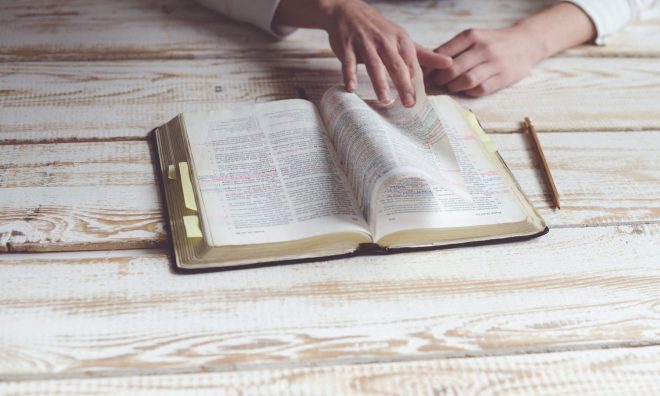
Image of open Bible

[Forty-Seventh in a series of posts on Bible Stories] 

Encore Post:

In the small town of Nazareth, not far from the Sea of Galilee, the Angel Gabriel appeared a second time. He visited a young girl, likely about twelve to fourteen years old. Mary of Nazareth was preparing for her marriage. Her parents and Joseph’s parents had likely arranged their wedding years before. 

Like all the Jewish families in the area, her ancestors had settled there when God’s people won their independence from the Greek rulers of Syria about one hundred and fifty years before. They were from David’s town of Bethlehem, near Jerusalem, and were descended from King David. She was related to Elizabeth, the wife of Zechariah, to whom Gabriel had appeared just six months earlier. 

Just as startled as Zechariah was, Mary responded very differently. The elderly priest had doubted God’s word sent by his messenger. If anything, the message she received was even harder to believe. She was a virgin, and she knew what everyone knew — it takes a man and a woman to conceive a baby. However, she did not doubt the word of God’s angel. She didn’t even ask why. She asked how. When told the Holy Spirit would cast his shadow over her, as he did in the beginning, over the face of the deep, she consented. “I am God’s slave,” she said. “Let it be.” And it was. The eternal Son, God of God, Light of Light, became a baby in her womb.

She would treasure this visit in her heart. She would need that strength. Hard days lay ahead. Her Joseph would doubt. Wouldn’t you if your beloved said, “Good news! We will have a baby. No, obviously, he’s not yours. He’s God’s son. An angel told me!” He would plan to divorce her until an angel appeared to him. A Jewish man named Joseph knew better than to doubt dreams!

Yet it meant the first-century equivalent of a shotgun wedding, whispered gossip in the shadows, a quick visit to cousin Elizabeth until everything calmed down, and long, uncomfortable walks while very pregnant. Yet, God’s word was enough for her. She was blessed to bear and raise God’s Son. He would suffer and die while she watched. Yet she knew what his name meant: he would save his people from their sins. She would indeed be blessed — and honored by God’s people as the Mother of God himself.

Originally posted at What does this Mean? Blog: https://whatdoesthismean.blog

The posts in the blog What does this Mean? are now available at What does this Mean? | Rev. Robert E. Smith | Substack

Rev. Robert E. Smith
Pastor Emeritus
Fort Wayne, Indiana

©2018 Robert E. Smith. All rights reserved. Permission granted to copy, share and display freely for non-commercial purposes. Direct all other rights and permissions inquiries to cosmithb@gmail.com

Angel in the Temple

[Forty-Sixth in a series of posts on Bible Stories]

Encore Post:

Four hundred years had passed since the prophet Malachi spoke to God’s people. God had been silent all those years, but had not been idle. Now, an elderly priest named Zechariah was chosen to burn incense in the Holy Place of the temple, right outside the Holy of Holies. The angel Gabriel, who stands in the presence of God himself, appeared to Zechariah to announce the miraculous birth of a son. He was to be named John (God’s gift) and would fulfill Malachi’s last prophecy to send a herald to prepare the way of the Messiah. The last time this angel appeared, he brought dreams to Daniel.

You’d think Zechariah, who should have known better, would accept the news that he would have a son with joy. Yet that, like Abraham, he would have a child in his old age, when he was barren, was too much. Gabriel punished him by taking his voice until the day his son was to be circumcised.

When John was born, his relatives asked Zechariah what name to give his son. Zechariah wrote on a Roman wax tablet, “His name is John.” Then the silence of God was broken. Zechariah prophesied about the coming salvation and the role his son would play in it. We sing this prophecy in the liturgy of morning prayer. It is called the Benedictus. This old priest was, therefore, the second-to-last prophet of the Old Testament. His son, who we know as John the Baptist, would be the last and greatest.

John the Baptist had almost all the credentials to be the Messiah. His father was a priest, descended from Aaron. His mother was related to Mary, the mother of Jesus, and so descended from King David. Gabriel the Archangel announced his birth in the temple, while his father was offering prayers on behalf of the people to God. Both of his parents were very old, like Abraham and Sarah, and barren, like Hannah, the mother of Samuel. God named him in the same way he named Isaac and changed Jacob’s name to Israel. The angel announced he would come in the spirit and power of Elijah, one of the greatest prophets. Yet from the very start, he and his parents understood John was not the Messiah, but the one who would reveal him to the world and prepare the way for him.

Originally posted at What does this Mean? Blog: https://whatdoesthismean.blog

The posts in the blog What does this Mean? are now available at What does this Mean? | Rev. Robert E. Smith | Substack

Rev. Robert E. Smith
Pastor Emeritus
Fort Wayne, Indiana

©2018 Robert E. Smith. All rights reserved. Permission granted to copy, share and display freely for non-commercial purposes. Direct all other rights and permissions inquiries to cosmithb@msn.com

Use the Bible to Understand the Bible

[Fourth in a series of posts on how to read the Bible]

Encore Post:

Many beloved passages in the Bible are as clear as mountain streams fed by melting snow. “In the beginning, God created the Heavens and the Earth.” (Genesis 1:1). “For God so loved the world, that he gave his only son (John 3:16). “God is Love.” (1 John 4:8) These and dozens like them are so clear, we teach them to small children. Yet others are not so clear. Some, like the detailed laws God gave to Israel, we suspect that God no longer wants us to observe. Others don’t seem to make sense to us at all. How can we be sure what they mean for us?

The answer is actually a part of Rule #1: since the Bible is God’s word, we can use one passage to explain others. We can be sure of the interpretation we discover this way because the words we use are God’s own words.

Let’s look at a few passages to see how this works. We know that most of the national law God gave to the Kingdom of Israel does not bind us, because St. Paul tells us not to allow anyone to judge us on the basis of them. (Colossians 2:16-23) We know, however, that the Two Great Commandments do, because Jesus tells us to observe them. (Luke 10:26-28) In another place, when God told Abraham to sacrifice his son, we wonder what he was thinking. The author of the Book of Hebrews tells us. Hebrews 11:17-19)

So, when you wonder if there’s more to a passage, look elsewhere in the Bible. God will often give you more insight when you do this.

Originally posted at What does this Mean? Blog: https://whatdoesthismean.blog

The posts in the blog What does this Mean? are now available at What does this Mean? | Rev. Robert E. Smith | Substack

Rev. Robert E. Smith
Pastor Emeritus
Fort Wayne, Indiana

©2018 Robert E. Smith. All rights reserved. Permission granted to copy, share and display freely for non-commercial purposes. Direct all other rights and permissions inquiries to cosmithb@msn.com

Church Words: Redemption

[Twenty-Third in a series of posts on church words]

Encore Post:

One of the most common stories of redemption in the Old Testament comes to us in the book of Ruth. That whole book is about her redemption. Remember, Boaz was her kinsman’s redeemer. There are redeemers in the Old Testament, but the story of Ruth and Boaz has always caught my attention. By that act of redemption, Ruth is grafted into the genealogy of Jesus, the redeemer of the world! But what do we mean by “redemption”?

Redemption is one word that dutifully describes the work of Christ’s atoning sacrifice for us. Redemption involves gaining possession of something in exchange for payment. Dr. Luther is a master at discussing the term “redemption” when speaking about the meaning of the second article. There, Luther says in line with Scripture, “[Jesus Christ] has redeemed me, a lost and condemned person, purchased and won me from all sins from death and the power of the devil, not with gold or silver, but with His innocent sufferings and death….”

It is not like, however, that Jesus is paying Satan, as if Satan has power over Jesus. No, it’s not like that at all. While humanity was in the grasp of sin and death, it was not Satan who needed the payment of Christ’s blood. Rather, it was Holy and Righteous God.

God, who is indeed Holy and Righteous, could not be in the presence of sin. Therefore, He certainly could not be in the presence of sinful man, and allow them to live. However, by the work of the Son, Jesus Christ, He came to redeem sinful man. He came to gain possession of humanity from the grips of everlasting death for himself.

Jesus pays what we owe to God, who has been gracious and merciful to us, having sent his own Son into the world to be our redeemer. Jesus is the bridegroom is who pays the dowry to have His bride. And He pays that price with His own body and blood at the cross. Christ’s bride is the Church. And He dresses her in his own clothing and presents her to Himself. Redeemed and a possession of Christ forever.

Originally posted at What does this Mean? Blog: https://whatdoesthismean.blog

The posts in the blog What does this Mean? are now available at What does this Mean? | Rev. Robert E. Smith | Substack

Rev. Jacob Hercamp
Christ Lutheran Church
Noblesville, Indiana

©2019 Jacob Hercamp. All rights reserved. Permission granted to copy, share and display freely for non-commercial purposes. Direct all other rights and permissions inquiries to cosmithb@msn.com

Stay with Us, Lord, for it is Evening

Encore Post:

Today, our Easter celebration of the resurrection is filled with joy. White paraments, flowers, and banners decorate our churches. Well-practiced organs, choirs, and musical instruments of all kinds add to our song. After all, we know the story and how it ends. Jesus is risen!

The first Easter was quite different. Women close to Jesus reported visions of angels and the Lord himself. The disciples didn’t know what to think. The five accounts of that day show the confusion. (Matthew 28:1-15, Mark 16:1-8, Luke 24:1-49, John 20:1-23, 1 Corinthians 15:3-5) Different people were running all over the place, and each story is its own. One thing was for sure. The tomb was empty.

On the first Sunday afternoon, two disciples were on the road home, feeling very unsettled. Could it be true? Was the Lord really risen from the dead? Jesus appeared to them, but did not reveal himself to them. As they walked to Emmaus, Jesus showed them how the Old Testament pointed to him and that he had to suffer, die, and rise again from the dead. They invited him to stay with them for the evening. As they ate dinner, Jesus blessed the bread, broke it, and gave it to them. They recognized him. He immediately vanished.

These two disciples immediately went back to Jerusalem to report to the disciples what had happened. There, they learned Jesus had appeared to Peter. As they were talking about this, Jesus removed all doubt. He appeared to them, ate some food to show them he was not a ghost, but had risen from the dead, body and soul. He then blessed the Apostles and gave them the power to forgive and retain sins.

When life gets confusing, and we do not know what to do, Jesus comes to us in his word. Even though we do not see him, he is always with us. When we pray, “Stay with us, Lord,” he does. We are never alone, even until the end of time itself.

Originally posted at What does this Mean? Blog: https://whatdoesthismean.blog

The posts in the blog What does this Mean? are now available at What does this Mean? | Rev. Robert E. Smith | Substack

Rev. Robert E. Smith
Pastor Emeritus
Fort Wayne, Indiana

©2018 Robert E. Smith. All rights reserved. Permission granted to copy, share and display freely for non-commercial purposes. Direct all other rights and permissions inquiries to cosmithb@msn.com

The Day of Resurrection

Encore Post: He is risen! He is risen indeed! Hallelujah!

In the silence of a cold, dark tomb, the world changed forever. Just as he promised, Jesus rose from his rest in the grave, breaking the seal of the tomb forever. And no one noticed.

The Romans were really good at torturing people to death. Crucifixion was a slow death, designed to kill with the maximum amount of pain and humiliation possible. If the Romans killed you, you were dead. Jesus, in fact, was already dead when the soldiers moved to hurry the process to get the bodies into a grave before sunset and the beginning of the Sabbath.

Once they laid Jesus in the tomb, no one expected him to go anywhere. Pilate ordered the tomb sealed by the authority of Rome, setting its seal on the stone that shut it off from the world. Had he not risen from death, the women would have completed his embalming, and they would have mourned him for seven days. After a year, they would have gathered his bones into a stone box. In fact, this is what Caiaphas’ family did. Archaeologists have found the high priest’s box. Had he not risen, likely no one today would even know the name of Jesus.

But Jesus did rise from the dead. The seal of our graves is broken. When we die now, our spirits live with him until the last day. When Jesus returns. On that day, he will call our bodies from the grave, and a new creation will occur. We will finally be whole — our bodies — like his resurrected body, will be fit for eternal life. Death no longer has a sting. The grave will have no victory. (1 Corinthians 15:55-57)

That is why Easter strikes such a chord with Christians. It is why we greet each other with joy… Christ is risen…

Originally posted at What does this Mean? Blog: https://whatdoesthismean.blog

The posts in the blog What does this Mean? are now available at What does this Mean? | Rev. Robert E. Smith | Substack

Rev. Robert E. Smith
Pastor Emeritus
Fort Wayne, Indiana

©2018 Robert E. Smith. All rights reserved. Permission granted to copy, share and display freely for non-commercial purposes. Direct all other rights and permissions inquiries to cosmithb@msn.com

Christ’s Sabbath Rest in the Tomb

Encore Post: Jesus died late in the afternoon on Good Friday, just before the Sabbath began at sunset. Two of his secret disciples asked Pilate for his body — Nicodemus and Joseph of Arimathea. They gave him a hasty but rich man’s burial. Several of the women closest to Jesus followed them to the tomb. Joseph rolled a large stone in front of the entrance, and they left him there. Later, at the priests’ request, Pilate set a guard and sealed it to prevent the body’s theft. As the second day Jesus was dead began, he was finally at rest.

As God rested on the seventh day of creation, so now Jesus rested on the first Sabbath of the new creation. By his sacrifice on the cross, he destroyed sin and the power of the devil. Soon, when the Sabbath ended, he would break the power of death as well.

As Christians prepare for a joyful Easter celebration, we often miss this moment of quiet and peace. Soon, when sunset comes, the third day will begin. Sometime between that sunset and dawn, Jesus rose from the dead, descended to Hell to complete his victory over Satan, and became the first to rise into eternal life. The Church will begin its Vigil of Easter at sunset and sing the songs of Resurrection again.

Originally posted at What does this Mean? Blog: https://whatdoesthismean.blog

The posts in the blog What does this Mean? are now available at What does this Mean? | Rev. Robert E. Smith | Substack

Rev. Robert E. Smith
Pastor Emeritus
Fort Wayne, Indiana

©2018-2024 Robert E. Smith. All rights reserved. Permission granted to copy, share and display freely for non-commercial purposes. Direct all other rights and permissions inquiries to cosmithb@gmail.com